


Are EC motors and VFDs the same? Understanding their differences is crucial for motor control and energy efficiency. In this article, we will explore the key differences between an EC motor and a VFD. You’ll learn how each works, their advantages, and when it’s best to choose one over the other for optimal performance.
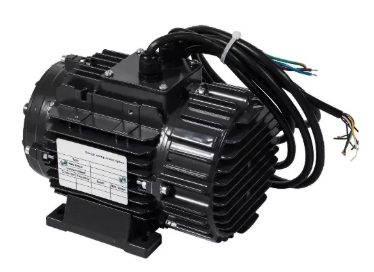
An EC (Electronically Commutated) motor is a type of motor that uses integrated electronics and a brushless design for efficient performance. It combines a DC motor with a built-in electronic controller to regulate speed and optimize energy consumption. This self-regulation means EC motors do not require external controllers to adjust their speed, unlike traditional AC motors.
Feature | EC Motor | Traditional AC Motor |
Speed Control | Built-in electronic speed control | External device (VFD) required |
Energy Efficiency | High – adapts to load conditions | Lower – constant speed operation |
Maintenance | Low – fewer moving parts | High – requires regular maintenance |
● How EC motors operate: EC motors use electronic commutation, which eliminates the need for mechanical brushes. This results in less friction, improved reliability, and quieter operation.
● Key benefits: These motors offer high energy efficiency, reduced maintenance costs, and extended service life due to fewer moving parts.
EC motors provide several advantages over traditional AC motors:
Advantage | EC Motors | Traditional AC Motors |
Energy Efficiency | Adjusts speed to demand, reducing power usage | Full-speed operation regardless of demand |
Reduced Maintenance | Fewer moving parts, lower wear | Requires regular maintenance and part replacements |
Quiet Operation | Operates silently due to brushless design | Noisy, especially with wear and friction |
● Energy savings: EC motors adjust their speed based on load, providing more efficient operation compared to traditional AC motors, which run at a constant speed.
● Reduced maintenance: With no brushes and fewer mechanical parts, EC motors require less maintenance, offering a more reliable solution in the long run.
A Variable Frequency Drive (VFD) is a device that controls the speed of an AC motor by varying the frequency of the input voltage. VFDs are often used with traditional AC motors to adjust their speed based on the demand, which improves energy efficiency by avoiding wasted energy.
Feature | VFD | Traditional AC Motor |
Speed Control | Adjusts speed based on load | Fixed speed |
Energy Efficiency | Reduces energy consumption during low demand | Consumes full power all the time |
Maintenance | Requires periodic checks and servicing | High – regular maintenance needed |
● What is a VFD?: A VFD works by converting the standard AC power to DC, and then converting it back to AC at the desired frequency. This process allows the motor to run at different speeds.
● How VFDs control motor speed: By adjusting the frequency of the voltage supplied to the motor, a VFD can control the speed of an AC motor, providing more flexibility and reducing power consumption during low-load times.
VFDs offer a variety of benefits for motor performance and efficiency:
Benefit | VFD-Controlled Motor | Fixed-Speed Motor |
Energy Efficiency | Adjusts speed to match demand | Runs at full speed regardless of load |
Control | Provides precise speed regulation | Limited or no speed control |
Cost Savings | Saves energy by optimizing motor speed | Higher energy consumption |
● Energy efficiency: VFDs reduce energy consumption by adjusting motor speed based on load, which helps save power and reduce electricity costs.
● Flexibility and control: VFDs allow for precise control over motor performance, making them ideal for systems with varying load conditions.
● EC motor electronics: EC motors have built-in electronics that allow them to adjust their speed automatically. This eliminates the need for external devices to control motor speed.
● VFD and external control: A VFD is an external device that controls the speed of an AC motor. The motor itself may not have the built-in capability to vary speed without the VFD.
Aspect | EC Motor | VFD |
Energy Use | More energy-efficient due to built-in control | Provides efficiency based on external control |
Flexibility | Adjustable speed inherent in the motor | Relies on external control for flexibility |
● Energy use: EC motors are generally more energy-efficient than AC motors controlled by a VFD, as they adjust speed based on load without external help.
● Flexibility: While both EC motors and VFDs provide variable speed, EC motors do so inherently, while VFDs rely on external controllers.
● EC motors: With fewer mechanical parts, EC motors require less maintenance. The elimination of brushes and mechanical commutation means fewer parts are subject to wear.
● VFDs: VFDs are external devices and require regular maintenance to ensure they continue functioning properly, particularly their electrical components.
Tip: If low maintenance is a priority, an EC motor is a better choice due to its simpler, more reliable design.
EC motors do not require a VFD for speed control because they have built-in electronics. However, in certain complex systems, a VFD may still be used for additional control or integration with other equipment.
Control Method | EC Motor | VFD |
Built-in Control | Speed control is inherently built-in | Speed control is external and requires a VFD |
External Control | No need for VFD | VFD is essential for speed regulation |
● Built-in control versus external control: EC motors have their own internal control mechanisms, so adding a VFD is not typically necessary.
● When a VFD is used with an EC motor: In some systems, particularly large HVAC or industrial setups, a VFD might be used alongside an EC motor for more sophisticated control over multiple motors.
Using both an EC motor and a VFD can provide the highest level of flexibility and efficiency. For example, in large systems, VFDs can manage multiple EC motors, enabling centralized control and real-time adjustments.
Benefit | EC Motor + VFD Combination | Single EC Motor |
Energy Savings | Maximized – adaptive control across multiple motors | Energy-efficient but limited to individual motor control |
Flexibility | Excellent – can handle complex systems | Limited to motor itself |
Control | Enhanced control through integration | Precise but independent control |
● Enhanced control: Combining both allows for precise adjustments and maximum energy savings, especially in systems with fluctuating loads or varying environmental conditions.
● Example applications: Large HVAC systems or industrial machinery often benefit from the synergy of EC motors and VFDs.
● Energy and cost efficiency: EC motors are ideal for applications that prioritize energy savings and minimal maintenance.
● Long-term savings: Due to their self-regulation and reduced need for maintenance, EC motors can provide cost savings over time.
● Versatility with AC motors: If you’re using traditional AC motors, a VFD provides a versatile and efficient solution for controlling motor speed.
● Installation flexibility: VFDs are ideal when upgrading an existing system that uses traditional motors, offering a relatively simple solution to implement speed control.
EC motors and VFDs both offer valuable solutions for controlling motor speed and improving efficiency, but they serve different roles. EC motors have integrated electronics for self-regulation, making them more energy-efficient and requiring less maintenance. VFDs, on the other hand, are external devices that offer control over AC motors but come with their own maintenance needs. Consider your specific system needs—choose EC motors for energy efficiency and low maintenance, or VFDs for flexibility and control with AC motors. In some cases, using both can provide optimal performance and savings. For expert guidance and solutions, trust Dowell to help you make the right choice for your system.
A: No, an EC motor is not the same as a VFD. An EC motor has built-in electronics for speed control, while a VFD (Variable Frequency Drive) is an external device used to adjust the speed of traditional AC motors.
A: An EC motor combines a DC motor with integrated electronics to provide efficient variable-speed control. It adjusts its speed automatically without needing an external controller like a VFD.
A: EC motors are more energy-efficient and require less maintenance than motors controlled by VFDs. They are ideal for systems that need consistent, variable-speed control without additional devices.
A: No, EC motors do not require a VFD for speed control, as they already have integrated electronics. However, in complex systems, a VFD may be used for advanced control of multiple motors.


