


Views: 0 Author: Site Editor Publish Time: 2026-01-12 Origin: Site


Are you maximizing the efficiency of your EC fan? Proper control of EC fans is crucial for optimizing performance and saving energy. In this article, we’ll explore various methods to control an EC fan, including manual controls, automated systems, and advanced technologies like VFDs and IoT integration. You’ll learn how to ensure your EC fan operates efficiently while reducing energy costs.
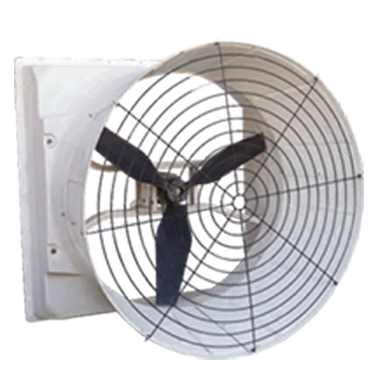
An EC fan (Electronically Commutated fan) uses brushless DC motors and advanced electronic controls to provide highly efficient and precise airflow management. Unlike traditional fans, which run at a constant speed, EC fans are equipped with a motor controller that adjusts the fan speed based on demand. This allows for better energy efficiency, precision control, and variable speed performance.
● How EC fans work: They use an electronic motor that eliminates mechanical parts like brushes, which reduces friction and maintenance needs. This results in smoother and quieter operation.
● Key benefits: EC fans offer energy savings by running at optimal speeds and are able to adjust to different load conditions.
Compared to traditional AC fans, EC fans offer numerous advantages, particularly in energy efficiency and performance flexibility. Some key benefits include:
Feature | EC Fan | Traditional Fan |
Energy Efficiency | High - adjusts speed based on demand | Low - fixed speed, higher consumption |
Adaptability | Can be integrated with automation systems | Limited adaptability |
Maintenance | Low - fewer mechanical components | High - requires regular maintenance |
Control Precision | High - precise speed adjustment | Low - no speed control |
Manual control of an EC fan typically involves basic on/off switches and speed controls using resistors or variable transformers. While this method is simple, it lacks the flexibility and precision offered by more advanced control systems.
Control Method | Advantages | Limitations |
On/Off Control | Simple, inexpensive | Limited control, no speed variation |
Speed Control via Resistor | Easy implementation | Energy inefficiency, limited precision |
● On/Off control: A basic solution for turning the fan on or off as needed.
● Speed control: Variable speed control can be achieved using transformers or resistors, but it’s less efficient than automated systems.
Automated control integrates EC fans with sophisticated systems such as HVAC or building management systems. This allows for real-time adjustments to airflow, ensuring optimal performance and energy efficiency at all times.
● Automated adjustments: These systems continuously monitor and adjust fan speed based on factors like room temperature or system load.
A Variable Frequency Drive (VFD) is one of the most effective ways to control EC fans. VFDs adjust the speed of the motor by changing the frequency of the electrical supply, allowing the fan to operate at different speeds according to the demand.
Parameter | Fixed-Speed Fan | EC Fan with VFD |
Speed Adjustment | No adjustment | Variable speed based on demand |
Energy Consumption | High, constant | Reduced, based on real-time needs |
Fan Longevity | Shorter, due to constant high speed | Longer, due to reduced wear and tear |
● Adjusting speed: VFDs allow for precise control of fan speed, ensuring that the fan only uses as much energy as needed for the specific load.
● Benefits: Using VFDs results in energy savings and helps extend the life of the fan by reducing wear and tear.
Notes: If you want to maximize the energy efficiency of your EC fan, integrating a VFD system is highly recommended.
Modbus and BACnet are communication protocols that enable EC fans to communicate with building management systems or other control devices.
Protocol | Features | Ideal Use |
Modbus | Widely used for industrial applications | Simple integration with systems |
BACnet | More suitable for smart building applications | Complex, real-time control and monitoring |
● Modbus: A widely used protocol for communication between EC fans and control systems.
● BACnet: Another protocol that’s commonly used in smart buildings for monitoring and controlling HVAC systems.
● Integration: These protocols allow for seamless integration of EC fans into larger systems, enabling centralized control.
● Smart control: They allow for real-time monitoring and data collection, leading to more informed decisions.
Tip: For larger systems or smart buildings, using Modbus or BACnet will enable you to control and monitor EC fans remotely and efficiently.
The integration of IoT (Internet of Things) technology allows you to control EC fans remotely via smartphones, tablets, or computers. Sensors can provide real-time data on fan performance, airflow, and energy usage.
Feature | Standard Control | IoT-based Control |
Fan Control | Manual or limited automated | Real-time, dynamic adjustments |
Energy Optimization | Fixed settings | Adaptive to environmental factors |
● Sensors: Use sensors to detect environmental changes and adjust the fan speed accordingly. This real-time control optimizes energy efficiency and ensures that the fan is working at its best performance.
● Cloud-based systems: Cloud technology can be used to store and analyze data from the fan, providing valuable insights for ongoing system improvements.
Notes: IoT integration for EC fans is an excellent choice for smart buildings looking to optimize energy management and reduce operational costs.
One of the major advantages of EC fans is the ability to adjust speed based on load conditions. By controlling fan speed, you can ensure that the fan is only running as fast as needed, which helps conserve energy.
Load Condition | EC Fan Control | Fixed-Speed Fan |
Low Demand | Low speed, reduced energy use | Full-speed, wasted energy |
High Demand | Full speed, meets system needs | Full-speed, no efficiency gains |
● Adjusting to demand: EC fans adjust their speed to meet the changing load requirements, reducing unnecessary energy consumption.
EC fans with variable speed control consume far less energy than traditional fans with fixed speeds. By adjusting the speed according to load, EC fans save significant amounts of power.
● Comparison: Fixed-speed fans run at full capacity regardless of system demand, wasting energy during low-load times.
While EC fans are generally reliable, issues can arise, particularly with their control systems. Some common problems include:
Issue | Possible Cause | Solution |
Fan not responding to speed | Control system failure or misconfiguration | Reset or recalibrate controls |
Irregular fan speeds | Sensor malfunction or software error | Recalibrate or update software |
● Fan not responding to speed adjustments: The fan might fail to adjust speed due to issues with the control system or sensors.
● Irregular speeds: The fan may run at inconsistent speeds, which can indicate a problem with the motor controller or VFD.
● Recalibration: If the fan is not responding to controls, recalibrating the fan settings might be necessary.
● Resetting settings: Sometimes, simply resetting the fan control system can solve speed inconsistencies.
To keep your EC fan running efficiently, it’s essential to perform regular maintenance and calibration. This ensures that the fan continues to operate at peak performance and maximizes energy savings.
Task | Frequency | Importance |
Cleaning the fan | Every 6 months | Prevents blockages and maintains efficiency |
Calibrating control settings | Annually | Ensures optimal performance |
● Cleaning: Dust and debris can affect fan performance. Regular cleaning is important to avoid clogging.
● Calibration: Ensuring that the fan is calibrated correctly helps avoid energy wastage and keeps it operating smoothly.
Integrating EC fans into a larger system, such as an HVAC or smart building setup, ensures that the fans work seamlessly with other components.
● System compatibility: Ensure that your EC fans are compatible with your building management system (BMS) or HVAC controls for maximum efficiency.
Utilizing smart controls such as digital thermostats, occupancy sensors, and automatic controllers can help further optimize the performance of EC fans.
● Smart integration: Advanced smart controls can adjust fan speeds based on environmental factors like temperature and humidity, improving both comfort and energy efficiency.
Notes: Implementing these best practices helps you achieve the best performance and longevity from your EC fan.
Controlling EC fans efficiently is key to optimizing performance and reducing energy consumption. Whether through manual control, automated systems, VFDs, or IoT integration, the right control method can make a significant difference in energy savings. By regularly maintaining the fan and integrating it with other building systems, you can ensure that your EC fan operates efficiently, saving both energy and costs over time.
Final recommendation: Consider your system’s needs and implement the best control strategy to maximize the performance of your EC fan while reducing operational costs. For expert guidance and solutions, trust Dowell to help you achieve the best results with your EC fan systems.
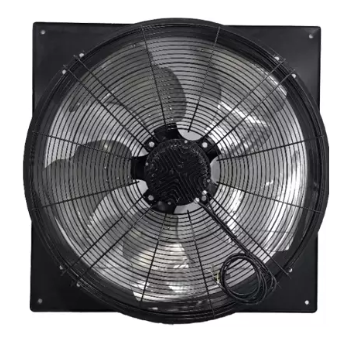
A: An EC fan (Electronically Commutated fan) is a highly efficient fan that uses brushless DC motors and electronic controls to adjust fan speed, optimizing energy use and airflow.
A: EC fans can be controlled manually via switches, or automatically using systems like Variable Frequency Drives (VFDs), Modbus, BACnet protocols, or IoT for real-time, energy-efficient performance adjustments.
A: Proper control of an EC fan optimizes airflow, reduces energy consumption, extends the fan’s lifespan, and improves system efficiency, leading to significant cost savings.
A: Yes, a Variable Frequency Drive (VFD) is commonly used to adjust the speed of EC fans based on demand, offering precise control and energy savings.


