


Views: 286 Author: Site Editor Publish Time: 2026-02-25 Origin: Site


In the world of ventilation systems, selecting the right type of fan is crucial for optimizing energy efficiency, minimizing maintenance, and ensuring a quiet operation. When comparing EC fans and plug fans, the differences in performance, efficiency, and application are significant. EC fans, which feature electronically commutated motors (ECMs), have become the go-to choice for many industries due to their innovative technology. At Suzhou Dowell Ventilation Technology Co., Ltd., we specialize in providing top-tier EC fans designed to meet the growing demand for energy-efficient and low-maintenance ventilation solutions. In this article, we will compare EC fans with plug fans in terms of design, efficiency, noise levels, and applications to help you make an informed decision.
A plug fan is a type of fan that is directly mounted into a duct or a housing system. These fans are designed to push air through ducts or open spaces with high efficiency. The term plug fan comes from the fact that the fan is typically "plugged" into a duct or system to move air. The motor of the plug fan is often an AC induction motor, which operates at a fixed speed. To adjust airflow in plug fans, external components like belts, pulleys, or reducers are often required to modify speed, which introduces extra components and potential points of failure.
The plug fan design is straightforward and works well in many ventilation systems. It typically excels in applications where high static pressure is required or where space constraints limit the fan’s configuration. However, plug fans often have less flexibility in terms of speed control compared to EC fans, making them less efficient when adjusting airflow for varying conditions.
Plug fans are commonly used in HVAC systems, industrial ventilation, and air conditioning units. They are often found in applications where high airflow is needed at a constant speed, such as in cleanrooms, warehouses, and large-scale commercial buildings. However, these fans typically require external systems to adjust their speed, making them less energy-efficient in environments where airflow requirements fluctuate frequently.
While plug fans serve a wide range of industrial applications, their energy consumption, noise levels, and need for regular maintenance make them less ideal for situations that demand energy savings and quieter operations.
One of the standout advantages of EC fans is their variable speed control. Unlike plug fans, which typically operate at a fixed speed, EC fans can adjust their speed automatically based on real-time airflow requirements. This allows EC fans to optimize energy consumption by only using as much power as necessary for the given application. The ability to adjust fan speed also means that EC fans reduce energy waste, making them significantly more energy-efficient than plug fans.
The variable speed capability of EC fans is particularly beneficial in applications where the airflow needs change depending on time of day or environmental conditions, such as in HVAC systems for office buildings or manufacturing facilities. In these environments, EC fans can reduce energy consumption by lowering fan speeds when less ventilation is required, which directly translates to cost savings on energy bills.
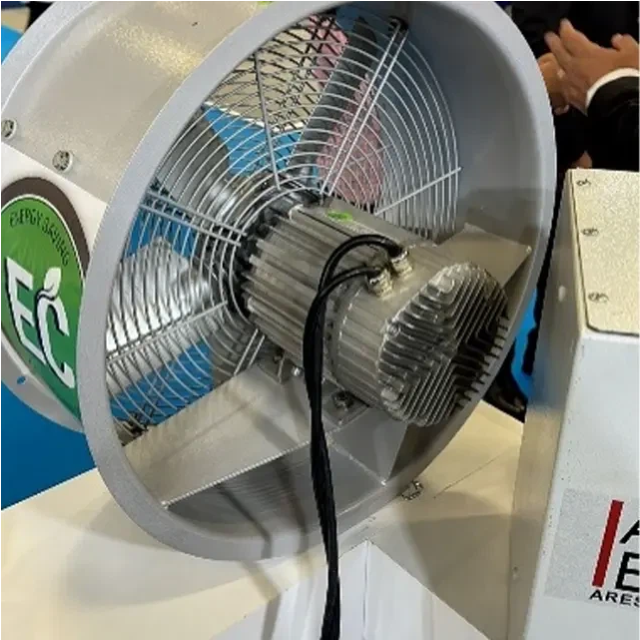
Another key advantage of EC fans is the presence of integrated electronics that control the motor speed. These onboard electronics eliminate the need for external controllers, which are commonly required in traditional AC plug fans. The integration of electronics directly into the fan ensures more precise control over speed, resulting in better performance, improved efficiency, and a more streamlined system.
At Suzhou Dowell, our EC fans feature brushless DC motors with integrated electronics that allow seamless control of the fan speed without additional components. This results in a more reliable and efficient system that requires less maintenance and delivers higher overall performance.
One of the main reasons EC fans are often considered superior to plug fans is their higher efficiency. As mentioned earlier, EC fans feature variable speed control, which allows them to adjust power consumption based on the required airflow. This leads to significant energy savings when compared to plug fans, which typically operate at a constant speed and are less adaptable to changing airflow needs.
Additionally, EC fans are typically more efficient in their design, utilizing brushless motors that have lower energy losses compared to AC induction motors. The advanced motor design of EC fans also minimizes heat generation, reducing the need for additional cooling and contributing to their overall efficiency.
When it comes to noise, EC fans have a significant advantage over plug fans. EC fans operate more quietly due to the brushless motor design and direct drive technology. The absence of belts and pulleys in EC fans results in reduced mechanical noise and vibrations, making them ideal for environments where low noise levels are essential, such as offices, hospitals, and data centers.
In contrast, plug fans tend to be noisier due to the mechanical components like belts, pulleys, and external controllers. The additional moving parts create more friction and noise, which can be disruptive in sensitive environments. Although plug fans can be quieter in specific applications, EC fans generally provide superior noise reduction across a range of settings.
Plug fans excel in applications that require high static pressure, especially in ducted systems. Because plug fans are designed to handle high pressures, they are often used in situations where air needs to be forced through long duct systems or when overcoming resistance is crucial. These fans are ideal for environments like air filtration systems, industrial exhaust systems, and fume extraction systems.
However, while plug fans perform well in high static pressure environments, they can still be inefficient when variable speed control or energy efficiency is required. EC fans are often a better choice when flexibility and energy savings are more important than raw pressure output.
EC fans are perfect for applications that require energy efficiency and low maintenance. They perform well in systems that need to adjust airflow based on changing conditions. For example, in HVAC systems for commercial buildings or air handling units, EC fans offer superior energy efficiency and can be controlled based on real-time needs, reducing both energy waste and costs.
Moreover, EC fans excel in environments that prioritize quiet operations and require less maintenance. Because they don’t rely on external controllers or mechanical parts like belts and pulleys, EC fans are ideal for applications that need a reliable and low-maintenance solution, such as clean rooms, hospitals, and office buildings.
When choosing between EC fans and plug fans, it’s essential to evaluate the specific needs of your system. Plug fans are an excellent choice for high-pressure applications where airflow is relatively constant, and static pressure is critical. These fans perform well in large ventilation systems where airflow needs to be pushed through long ducts.
On the other hand, EC fans are ideal for applications that demand variable speed control, energy efficiency, and low maintenance. If your system requires adaptability to fluctuating airflow needs and quieter operation, EC fans are the better choice.
To help you make the best choice, DowellFans offers two exceptional EC fan solutions with direct drive technology:
EC Axial Fans – Ideal for high airflow applications in large-scale ventilation systems, cooling units, and heat exchangers.
EC Centrifugal Fans – Perfect for high-pressure applications, including HVAC systems and industrial exhaust systems.
Feature | EC Fan | Plug Fan |
Efficiency | Higher | Moderate |
Noise | Lower | Moderate |
Static Pressure | Depends | Better at high static |
Control | Advanced | Basic |
In conclusion, EC fans offer significant advantages over plug fans in terms of energy efficiency, noise reduction, and low maintenance. While plug fans are still suitable for high-pressure applications, EC fans provide superior performance when variable speed control and energy savings are essential. If you're looking for a fan that can adapt to changing airflow needs while reducing your energy consumption and maintenance costs, DowellFans EC fans are the perfect solution.
For more information on our EC Axial Fans and EC Centrifugal Fans, don’t hesitate to contact us. Our team at DowellFans is ready to assist you in selecting the right fan for your system.
EC fans offer better energy efficiency, quieter operation, and reduced maintenance compared to plug fans, making them a more sustainable and cost-effective option for modern ventilation systems.
The main difference lies in their motor and control systems. EC fans use electronically commutated motors with variable speed control, while plug fans use AC motors with external speed controllers.
EC fans are generally better for HVAC systems due to their energy efficiency, variable speed control, and quieter operation, making them more adaptable to changing conditions.
While plug fans excel in high-pressure applications, EC fans can still perform well in systems requiring some pressure, especially when energy efficiency and quieter operation are priorities.


