


Views: 0 Author: Site Editor Publish Time: 2026-05-01 Origin: Site


Facility managers and engineers constantly face intense pressure to cut energy costs. Outdated HVAC systems drain operating budgets. They also complicate routine maintenance and take up excessive space. Finding a sustainable, cost-effective replacement is no longer optional.
So, what exactly is the solution? When you ask what EC stands for in the commercial industry, the answer is "Electronically Commutated." Essentially, this is a brushless DC (BLDC) motor featuring a built-in drive and controller. This brilliant design allows the unit to run directly on standard AC power without external converters.
Moving away from traditional AC or DC systems represents a strategic business decision. By upgrading to an EC Motor, you eliminate bulky external VFDs. You drastically reduce your total cost of ownership (TCO) in variable-load systems. Furthermore, you streamline your Building Management System (BMS) integration. In this guide, you will discover how these motors work, how they compare to legacy options, and how to navigate retrofitting risks.
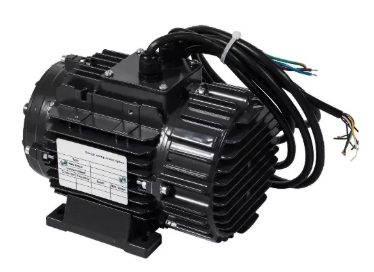
Integration: EC motors combine a motor, variable speed drive, and control electronics into one compact unit.
Efficiency: Capable of maintaining 85–90%+ efficiency even when dialed down to 20% of maximum speed.
Simplification: Direct-drive configuration eliminates belts, pulleys, and external variable frequency drives (VFDs).
Caveat: High reliance on integrated electronics means identifying potential power quality (harmonic) risks prior to large-scale retrofitting is critical.
To fully grasp the value of this technology, we must understand the literal meaning of commutation. Legacy motors rely on "mechanical commutation." They use physical carbon brushes to reverse the electrical current direction. These brushes constantly rub against a rotating commutator. Friction degrades the components over time. They generate excess heat. They create carbon dust. Eventually, they require physical replacement to prevent catastrophic failure.
In contrast, "electronic commutation" completely removes mechanical contact. These motors use onboard microprocessors and Hall effect sensors. The sensors constantly monitor the exact position of the rotor. They send this data back to the microprocessor. The controller then fires the stator coils in a precise sequence. It sequences the magnetic fields electronically. This frictionless operation drastically extends equipment lifespan while reducing noise.
We often call this system architecture the "all-in-one paradigm." You can break it down into three integrated sections:
Front-end: An onboard rectifier sits at the input. It seamlessly converts standard AC grid power into usable DC power. You do not need separate transformers.
Brain: The electronic controller acts as the central command. It manages voltage and current based on real-time feedback. It matches the back electromotive force (EMF) perfectly. This ensures optimal efficiency under changing loads.
Back-end: The physical motor utilizes a DC external rotor fitted with powerful permanent magnets. It generates rotation without inducing rotor currents. Preventing these secondary currents saves a massive amount of energy.
Buyers often struggle when choosing between motor types for commercial upgrades. Evaluating the technology requires a strict technical framework. Let us break down the advantages and disadvantages of the three primary contenders.
AC induction motors have dominated the industrial landscape for over a century. They use alternating current to create a rotating magnetic field in the stator. This induces a current in the rotor, causing it to turn.
Their main pros lie in their ruggedness. They are incredibly cheap upfront. They withstand harsh industrial environments easily. However, their cons are significant. Efficiency plummets rapidly when operating below peak synchronous speed. To achieve variable speeds, you must install bulky, expensive external variable frequency drives (VFDs).
DC brushed motors offer an entirely different operational profile. They run on direct current, making speed adjustments incredibly simple.
The primary pro is easy speed control. By simply altering the voltage, you change the speed. But the cons often outweigh this benefit in commercial settings. High mechanical wear from brushes and commutators makes them unreliable for continuous duty. They are inherently noisy. They also require external AC-to-DC rectifiers to run off a standard building grid.
This brings us to the hybrid solution. These units blend the best attributes of both legacy systems. They deliver DC-level variable speed precision. They boast exceptional longevity due to their brushless design. Better yet, they use standard AC power infrastructure natively.
The ultimate verdict is clear. They outperform both traditional options, especially in partial-load efficiency. To illustrate this engineering showdown, review the comparison chart below.
Feature |
AC Induction |
DC Brushed |
Electronically Commutated (EC) |
|---|---|---|---|
Speed Control |
Requires external VFD |
Voltage adjustments |
Built-in electronic controller |
Power Source |
AC Grid |
Requires AC-DC Rectifier |
AC Grid (Internal Rectification) |
Maintenance |
Low/Moderate |
High (Brush replacements) |
Minimal (Frictionless) |
Partial-Load Efficiency |
Poor |
Moderate |
Excellent (85-90%+) |
Acoustic Noise |
Moderate (Humming at low speeds) |
High (Mechanical scraping) |
Very Low |
Engineers love the technical specs, but facility owners care about the financial justification. You must look far beyond the initial sticker price. Let us break down the real business case.
Many buyers hesitate because an ec fan motor usually carries a higher individual unit cost. This leads to the "high cost" myth. However, you must look at the system as a whole.
When you install this technology, you eliminate the need for an external VFD. You also remove complex belt-drive components, pulleys, and external motor mounts. When you aggregate these eliminated costs, the initial capital expenditure (CapEx) falls to within ±10% of a traditional AC setup. You pay slightly more for the motor but save on the surrounding infrastructure.
The true financial power reveals itself in the operational expenditure (OpEx). Several unique drivers drastically lower your monthly utility and maintenance bills.
Turndown Efficiency: Standard AC motors waste energy when slowed down. Conversely, EC technology thrives at lower speeds. Thanks to the affinity laws of fans, dropping an EC unit to 80% speed can yield nearly 50% energy savings. It only consumes exactly what the load requires.
Lifetime Savings: When you calculate lifecycle energy costs, the numbers become staggering. Facilities typically see a 30% to 50% drop in total energy costs compared to non-optimized AC fans. Over a ten-year lifespan, these savings pay for the upgrade multiple times over.
Maintenance Reductions: Cooler running temperatures protect the internal electronics. This extends the bearing life significantly. The complete absence of physical carbon brushes eliminates routine maintenance schedules. Your team spends less time greasing bearings and replacing belts.
Cost Category |
Traditional AC System + VFD |
EC Direct-Drive System |
|---|---|---|
Initial Equipment (CapEx) |
Moderate (Motor + VFD + Belts) |
Moderate (All-in-one unit) |
Installation Labor |
High (Complex wiring/alignment) |
Low (Plug-and-play) |
Energy Costs (OpEx) |
High (Inefficient at low speeds) |
Low (Optimized turndown) |
Maintenance Costs |
High (Belt changes, lubrication) |
Minimal (Bearing checks only) |
Once you secure budget approval, you must decide where and how to implement this technology. Careful sourcing and application matching prevent costly engineering mistakes. Use the following criteria to guide your retrofitting strategy.
Not every motor in your building needs an upgrade immediately. You should target applications where variable demand is constant. They are best suited for HVAC air handling units (AHUs). They excel in cooling towers and condenser fans. Data center server racks and cleanroom environments also benefit massively. In these spaces, airflow requirements fluctuate throughout the day. The motor adjusts seamlessly to match the exact cooling load.
Modern smart buildings require seamless communication. Legacy systems often require complicated analog-to-digital converters. EC motors bypass this hurdle entirely. They natively accept 0-10V, PWM, or 4-20 mA control signals. This flexibility makes them virtually plug-and-play for modern Building Management System (BMS) networks. You can route a simple low-voltage wire from your controller directly into the motor housing. It instantly obeys speed commands with pinpoint accuracy.
Space in mechanical rooms is always at a premium. Traditional setups require a long motor shaft, a drive belt, and a separate fan wheel housing. Electronic commutation changes the physical geometry through "external rotor" designs.
The fan impeller mounts directly to the spinning outer casing of the motor. This direct-drive configuration saves a massive amount of axial space. Because the speed is completely variable, one scalable EC model can often replace multiple legacy fan sizes. You reduce your spare parts inventory. You also free up physical space inside your AHU cabinets.
We must maintain transparent assumptions about this technology. While the benefits are overwhelming, no engineering solution is perfect. You must understand the realistic downsides and technical hurdles before drafting a specification.
Electrical power quality is a critical factor in large facilities. Standard external VFDs usually include heavy line reactors or DC chokes. These components smooth out the electrical waveform. However, the compact nature of EC motors means they generally lack built-in bulky inductance.
This omission can result in steep current waveforms. These steep pulses create elevated 5th, 7th, 11th, and 13th electrical harmonics on your facility's grid. If you install dozens of these motors on a single circuit, the total harmonic distortion (THD) can spike. You might face electrical penalties or equipment interference. You will potentially require external harmonic mitigation hardware, such as active harmonic filters, to resolve this.
The "all-in-one" design is a double-edged sword. It saves space and simplifies wiring. But it complicates catastrophic repairs. If a tiny micro-component on the integrated electronic drive fails, repairing it on-site is rarely viable. The electronics are often potted in resin to prevent moisture damage. Therefore, if the brain dies, the entire motor unit typically requires replacement. You cannot simply swap a $50 drive board like you can in an external VFD panel.
Installation errors account for the majority of early system failures. When retrofitting older equipment, technicians sometimes make fatal assumptions. For example, they might try daisy-chaining older legacy DC controllers with modern EC units. This causes immediate electrical incompatibility.
Feeding the wrong voltage or crossing analog control wires will fry the sensitive onboard microprocessors instantly. Always follow the manufacturer's specific wiring schematics. Treat the unit as a highly sensitive computer, not just a rugged piece of spinning metal.
Best Practices for Retrofitting
Conduct a power audit: Always measure existing THD levels before adding multiple electronically commutated loads to a single distribution panel.
Isolate control wiring: Keep low-voltage 0-10V control wires physically separated from high-voltage AC mains to prevent signal interference.
Size for the peak: Size the unit for the absolute maximum required airflow, knowing you can easily dial the speed back electronically for daily operations.
The shift toward electronically commutated technology is not a passing trend. EC motors represent the absolute industry standard for energy efficiency and variable-speed control. They dominate modern commercial and industrial HVAC systems for a very good reason. They eliminate mechanical wear, drop operational costs, and simplify digital control integration.
To move forward, we recommend that facility managers and mechanical engineers take proactive steps. Conduct a comprehensive load profile audit on your existing AC systems. Identify the units running at partial loads most frequently. Calculate the exact ROI of an EC retrofit using local utility rates. By tackling your most inefficient systems first, you can fund future facility upgrades with the generated energy savings.
A: No. The variable speed drive electronics are fully integrated directly into the motor housing. This eliminates the need to purchase, mount, or wire a separate external variable frequency drive, saving both money and physical wall space.
A: Yes. Manufacturers specifically design "plug fans" powered by these motors to replace older, bulky belt-driven AC blowers. They fit perfectly into existing air handling units (AHUs) while drastically reducing the equipment footprint.
A: They share the exact same core technology, which is a brushless DC motor. However, the "EC" designation implies a fully integrated package. It contains onboard rectification, allowing the unit to accept standard AC mains power directly.
A: Yes. Removing physical carbon brushes eliminates mechanical scraping noises. Furthermore, the precise electronic commutation control drastically reduces the electrical humming commonly heard in traditional AC induction motors operating at low speeds.


