


Views: 366 Author: Site Editor Publish Time: 2025-10-20 Origin: Site


Fans are essential in industrial and HVAC systems. Traditionally, belt-driven fans dominated due to simplicity. However, emerging EC Axial Fan technology offers higher efficiency and precise airflow control. These fans reduce energy losses and adjust automatically to demand. In this article, we examine performance, maintenance, cost, and adaptability, helping you decide which fan best suits your system.
One of the most significant advantages of EC Axial Fans is their superior energy efficiency. Unlike traditional belt-driven fans, which rely on an induction motor connected to a mechanical pulley and belt system, EC fans utilize a direct-drive configuration with permanent magnets in the rotor. In a belt-driven system, the mechanical transmission of power through pulleys and belts introduces friction and losses, reducing overall efficiency by 10–30% depending on operating conditions. This inefficiency is particularly noticeable when the fan is running below full load, which is the case for many industrial and commercial applications where airflow demand fluctuates throughout the day.
EC Axial Fans, by contrast, eliminate these mechanical losses. The permanent magnet rotor requires no additional energy to generate a magnetic field, making the fan highly efficient, even at partial loads. Energy consumption can be reduced by as much as 40–68% at lower RPMs compared to equivalent belt-driven systems, translating into substantial operational cost savings over time. This efficiency is critical for modern HVAC systems, industrial ventilation, and energy-conscious facilities seeking to reduce both energy bills and carbon emissions.
Moreover, EC fans are inherently adaptive. They can automatically adjust their speed in response to real-time load changes. For example, during periods of lower occupancy in office buildings or hospitals, airflow requirements decrease. An EC fan reduces its speed accordingly, maintaining environmental conditions while consuming minimal energy. This dynamic load response not only improves energy efficiency but also enhances system longevity by reducing wear and tear on electrical and mechanical components.
Feature | EC Axial Fan | Belt-Driven Fan |
Partial Load Efficiency | High (automatic adjustment) | Low (mechanical losses) |
Peak Energy Consumption | Optimized | Fixed, higher |
Mechanical Losses | Minimal | Moderate to High |
Potential Energy Savings | 40–68% | N/A |
Tip: Facilities with variable occupancy or partial-load requirements derive the greatest benefits from EC fan adoption. In manufacturing plants, hospitals, and commercial buildings with fluctuating operational loads, EC fans can provide predictable savings and improved energy efficiency over belt-driven fans.
Noise and vibration are critical factors in fan selection, particularly in environments where comfort, productivity, or sensitive equipment is present. Traditional belt-driven fans generate significant vibration due to moving belts, pulleys, and shafts. Over time, belt wear or misalignment can increase vibration levels, generating operational noise and potential structural stress on ductwork or fan mounting supports. In addition, these vibrations can contribute to premature component wear, leading to higher maintenance costs and reduced system reliability.
EC Axial Fans minimize these problems through a direct-drive configuration. By removing belts, pulleys, and multiple bearings, vibration levels are greatly reduced. Fewer moving parts mean that mechanical disturbances are less likely, and noise levels are lower. This feature is particularly valuable in office buildings, schools, hospitals, laboratories, and other noise-sensitive environments where maintaining a quiet, comfortable space is essential. In industrial applications, reduced vibration extends the life of supporting structures and ductwork, decreases the likelihood of mechanical failures, and reduces maintenance downtime.
In practice, facilities that retrofit older belt-driven systems with EC fans often report noticeably quieter operation and fewer maintenance interruptions. The noise reduction achieved can improve workplace productivity and comfort, while simultaneously helping facilities meet local noise regulations.
Note: When upgrading older systems, consider EC fans for noise-sensitive environments. Their low vibration and quieter operation make them ideal for offices, laboratories, and healthcare facilities.
Modern ventilation systems demand precise airflow control to match varying operational requirements. EC Axial Fans excel in this regard, offering built-in electronic speed control. These fans can receive signals from thermostats, building management systems (BMS), or manual potentiometers, enabling automatic and real-time adjustments in airflow. This capability allows facilities to maintain consistent environmental conditions without manual intervention, optimizing both energy use and comfort.
Belt-driven fans, however, require external variable frequency drives (VFDs) or manual mechanical adjustments through pulley systems to alter speed. Installing and configuring VFDs adds cost, complexity, and labor to the system. Furthermore, retrofitting older facilities with VFDs can be disruptive and may require operational downtime. The mechanical nature of belt-driven fan control limits flexibility and makes precise load matching challenging.
The seamless integration of EC fans with control systems allows them to adjust automatically to changes in airflow demand. For example, an office space may experience lower occupancy during evenings. An EC fan responds by reducing speed, maintaining indoor air quality, lowering energy consumption, and reducing operational noise simultaneously. This automation reduces the need for manual adjustments and simplifies building operations.
The ability of EC fans to integrate with modern building controls makes them ideal for smart buildings, multi-zone ventilation systems, and energy-efficient retrofits.
While EC fans provide superior efficiency, adaptability, and low-maintenance operation, belt-driven fans maintain an advantage in certain high-performance scenarios. High-RPM operations, large-scale industrial exhaust, and heavy-duty ventilation processes often require peak airflow that belt-driven systems can deliver reliably. Since airflow in belt-driven fans is proportional to motor speed, they can generate higher total airflow at maximum RPM, which may be critical in factories, warehouses, or automotive cooling systems.
For instance, industrial exhaust systems with restrictive ductwork may achieve better airflow performance using belt-driven fans. Similarly, large-scale HVAC systems or automotive radiators may require high airflow during peak load conditions. In these cases, belt-driven fans’ mechanical robustness and ability to maintain high-speed operation can make them preferable.
Tip: Evaluate peak airflow and load requirements carefully. For systems with extreme-duty or high-RPM demands, a belt-driven fan may still be necessary, while EC fans are better suited for variable-load environments.
Maintenance is a significant cost factor in fan selection. EC Axial Fans have fewer moving parts, eliminating belts and reducing the number of bearings required. Scheduled maintenance is simple and typically limited to occasional cleaning and inspection of electrical connections. Lower maintenance requirements reduce labor costs, downtime, and operational disruptions.
Facilities with high-rise systems, large commercial installations, or industrial plants benefit from the reliability of EC fans. Reduced maintenance requirements translate into thousands of dollars in annual savings while extending system life.
In contrast, belt-driven fans require frequent inspections, including belt tension adjustments, pulley alignment, and bearing lubrication. Wear and tear can necessitate parts replacement and generate operational downtime. Unexpected failures in belt-driven fans may disrupt production, ventilation, or air quality, especially in critical applications.
Maintenance Aspect | EC Axial Fan | Belt-Driven Fan |
Belts & Pulleys | None | Required, frequent replacement |
Bearings | Minimal | Regular lubrication & replacement |
Labor Requirements | Low | Moderate to High |
Downtime Risk | Low | High |
Note: Over the lifecycle of a system, the higher maintenance costs of belt-driven fans often outweigh their lower initial purchase price.
EC fans experience less mechanical stress due to direct-drive operation, which enhances durability and lifespan. Typical EC fan lifespans exceed 50,000 hours under normal operating conditions, while belt-driven systems often have shorter effective operational lifespans due to mechanical wear. In mission-critical environments such as hospitals, data centers, and industrial production lines, reliability is paramount. EC fans provide predictable performance with minimal downtime, reducing the risk of operational disruption.
EC fans are compact and lightweight, simplifying installation in tight spaces or retrofits. Belt-driven fans require clearance for belts, pulleys, and alignment, which can complicate both new installations and system upgrades. This space efficiency also reduces structural demands and allows for easier integration in confined mechanical rooms or existing ductwork.
Tip: EC fans are ideal for modernizing facilities or installations with limited space availability.
EC fans offer significant flexibility in customization. Facility managers can select fan size, airflow rates, speed settings, and control interfaces to match system requirements. Scaling to multiple zones or larger installations is straightforward. In contrast, belt-driven fans require mechanical modifications to achieve similar adjustments, making them less adaptable for multi-zone or modular systems.
EC fans easily integrate with building management systems, responding to temperature, humidity, volatile organic compounds (VOCs), and pressure signals. Belt-driven fans require additional equipment, such as VFDs or programmable controllers, to achieve comparable automation and monitoring capabilities.
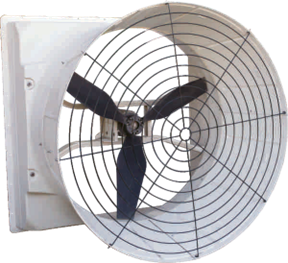
EC fans typically cost 10–20% more than belt-driven fans initially, depending on size, airflow capacity, and control features. While the upfront cost is higher, the long-term energy and maintenance savings can make EC fans more cost-effective over time.
EC fans can reduce energy consumption by up to 68% at lower speeds compared to traditional belt-driven fans, particularly in systems with variable loads. Reduced maintenance further lowers operational expenses, delivering strong lifecycle cost advantages.
Cost Category | EC Axial Fan | Belt-Driven Fan |
Purchase | Higher | Lower |
Energy | Lower | Higher |
Maintenance | Minimal | High |
Total Cost of Ownership | Lower | Higher |
ROI analysis frequently favors EC fans in applications with long operating hours and variable airflow demands. Payback periods typically range from 2 to 4 years. Facilities that carefully assess lifecycle costs, including energy and maintenance savings, often find EC fans provide a superior long-term investment.
Note: Conduct a thorough lifecycle cost analysis before deciding between fan types to ensure the selected solution meets both operational
EC fans surpass belt-driven fans in efficiency, noise, and maintenance. EC Axial Fans provide precise airflow control and long-term savings. Belt-driven fans still excel at high-RPM or heavy-duty use. Suzhou Dowell Ventilation Technology Co., Ltd offers reliable EC Axial Fans that optimize performance and energy use for modern systems.
A: An EC Axial Fan is a direct-drive fan with a permanent magnet motor for high efficiency and precise airflow control.
A: EC Axial Fans are quieter, more energy-efficient, and require less maintenance than belt-driven fans, especially at partial loads.
A: They save energy, reduce noise, and integrate easily with modern control systems, making them ideal for variable airflow applications.
A: They have higher upfront costs but offer lower long-term operating and maintenance expenses than belt-driven fans.
A: Belt-driven fans may be better for high-RPM, high-airflow, or extreme-duty conditions where peak performance is critical.
A: Maintenance is minimal; occasional cleaning and electrical checks are sufficient compared to frequent belt and bearing work in belt-driven fans.


