


Views: 136 Author: Site Editor Publish Time: 2025-08-11 Origin: Site


The world of cooling and ventilation technology has witnessed significant advancements over the years. Among these, the emergence of DC Axial Fans with EC Technology stands out as a revolutionary development. These fans combine the efficiency of direct current (DC) motors with electronically commutated (EC) technology, offering numerous benefits over traditional fan systems. This article delves deep into the comparative analysis of DC axial fans with EC technology against their conventional counterparts, highlighting their advantages, applications, and the impact on energy consumption.
DC axial fans equipped with EC technology represent a fusion of DC motor efficiency and advanced electronic control. The EC technology incorporates a brushless DC motor with a built-in AC to DC converter, allowing the fan to run on an AC power supply while enjoying the benefits of DC motor efficiency. This combination results in a fan that is not only energy-efficient but also offers precise speed control and reduced noise levels.
The core components of a DC axial fan with EC technology include the rotor, stator, electronic commutation system, and the fan blades. The electronic commutation eliminates the need for brushes, reducing mechanical wear and enhancing longevity. By electronically controlling the stator currents, the fan achieves optimal torque and speed, resulting in efficient airflow with minimal energy consumption.
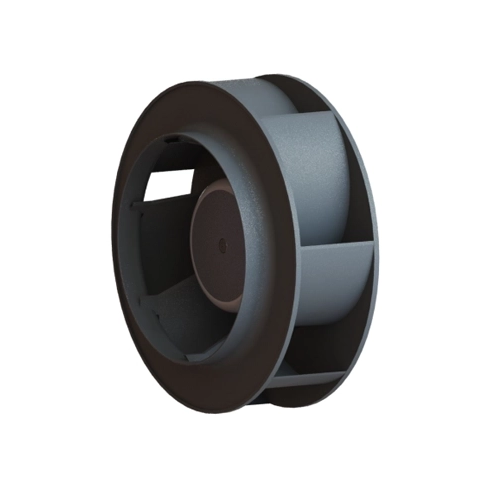 When comparing DC axial fans with EC technology to traditional AC fans, several advantages become evident. These benefits not only improve performance but also contribute to cost savings and environmental sustainability.
One of the most significant advantages is the superior energy efficiency. EC fans can achieve efficiency levels of up to 90%, compared to traditional AC fans that typically operate at around 60%. This efficiency stems from the EC motor's ability to reduce energy losses associated with heat and friction, leading to lower operating costs.
DC Axial Fans with EC Technology offer precise speed control through electronic modulation. This feature allows for adjustments in airflow to match specific application needs, enhancing performance and reducing unnecessary energy use. Traditional fans often lack this level of control, resulting in inefficiencies.
Noise pollution is a critical consideration in many environments. EC fans operate more quietly due to smoother motor operations and the elimination of mechanical commutation noises found in traditional fans. This makes them ideal for applications requiring minimal noise interference.
The versatility of DC axial fans with EC technology extends across various industries. Their energy efficiency and control capabilities make them suitable for a range of applications where traditional fans may fall short.
Heating, ventilation, and air conditioning (HVAC) systems benefit greatly from EC fans. The precise control over airflow ensures optimal temperature regulation and air quality. Energy savings in HVAC applications can be substantial when replacing traditional fans with EC models.
In data centers, maintaining the correct temperature is crucial for equipment performance and longevity. EC fans provide reliable and efficient cooling solutions, with the added benefit of reducing energy consumption in facilities that typically have high power demands.
Industries that require robust ventilation systems, such as manufacturing plants and warehouses, find EC fans advantageous. The durability and efficiency of these fans contribute to a safer working environment and lower operational costs.
Adopting DC axial fans with EC technology has both economic and environmental implications. The initial investment in EC fans may be higher than traditional fans, but the long-term savings and benefits often justify the cost.
The reduced energy consumption of EC fans leads to lower electricity bills. Over time, these savings can be significant, especially in operations where fans run continuously. Additionally, the reduced need for maintenance due to fewer mechanical parts lowers upkeep costs.
Energy efficiency contributes to a smaller carbon footprint. By consuming less power, EC fans reduce the demand on power plants, which often rely on fossil fuels. This results in lower greenhouse gas emissions, aligning with global efforts to combat climate change.
Real-world applications highlight the effectiveness of DC axial fans with EC technology. Several industries have reported improvements in performance and efficiency after transitioning to EC fans.
A major retail chain replaced traditional HVAC fans with EC fans in multiple stores. The result was a 30% reduction in energy consumption for ventilation, leading to substantial cost savings and a quicker return on investment.
An automotive parts manufacturer implemented EC fans in their painting and drying processes. The precise airflow control improved product quality, while energy use decreased by 25%, showcasing both operational and economic benefits.
Integrating DC axial fans with EC technology into existing systems requires careful planning. Understanding technical specifications and compatibility is essential for a successful transition.
EC fans are designed to operate with standard AC power supplies, thanks to their built-in AC to DC converters. This simplifies integration and eliminates the need for additional power supply modifications.
The advanced control capabilities of EC fans allow for integration with building management systems (BMS). This enables automated adjustments based on environmental conditions, enhancing efficiency and responsive operation.
The design of EC fans contributes to a longer operational lifespan compared to traditional fans. The absence of brushes reduces wear and tear, and the electronic components are designed for durability.
Without brushes and commutators, there are fewer mechanical parts that can fail. This leads to less frequent maintenance requirements and reduces the likelihood of unexpected downtime.
Many EC fans come equipped with diagnostic capabilities. They can provide feedback on performance metrics, allowing for proactive maintenance and ensuring the system operates at peak efficiency.
While EC fans offer numerous benefits, there are challenges to consider when adopting this technology. Understanding these can help in making informed decisions and planning appropriately.
The upfront cost of EC fans is generally higher than traditional fans. Budgeting for this investment requires careful consideration of the long-term savings and return on investment calculations.
Integrating and maintaining EC fans may require specialized knowledge. Training staff or hiring experts ensures that the systems are installed and operated correctly, maximizing the benefits of the technology.
The evolution of fan technology continues, with DC axial fans featuring EC technology at the forefront of innovation. Future developments are expected to focus on even greater efficiency, integration with smart systems, and enhanced environmental performance.
The Internet of Things (IoT) presents opportunities for EC fans to become part of interconnected systems. This can lead to smarter buildings where ventilation adapts automatically to occupancy levels and environmental conditions.
Research into new materials and aerodynamic designs aims to further improve the performance of axial fans. Lighter, stronger materials can enhance efficiency and reduce manufacturing costs.
The comparison between DC axial fans with EC technology and traditional fan options reveals a clear shift towards efficiency, control, and sustainability. While the initial investment may be higher, the long-term benefits in energy savings, operational performance, and environmental impact make EC fans a compelling choice. Industries that prioritize efficiency and precision stand to gain significantly from adopting DC Axial Fans with EC Technology. As technology advances, these fans are poised to become even more integral to modern ventilation and cooling solutions, driving progress towards greener and smarter infrastructures.


