


Views: 166 Author: Site Editor Publish Time: 2025-07-25 Origin: Site


The ventilation industry has undergone significant transformations over the past few decades, driven by the need for energy efficiency, environmental sustainability, and technological advancements. Among the pioneering technologies leading this evolution is the EC Motor Axial Fan. This innovative fan technology is redefining how we approach ventilation solutions, offering unparalleled benefits over traditional systems. This article delves deep into why EC Motor Axial Fans are poised to be the future of ventilation, exploring their technology, advantages, applications, and impact on energy consumption and environmental footprint.
 The Evolution of Ventilation Technology
Ventilation systems have historically relied on conventional AC motors, which, while effective, come with limitations in energy efficiency and control capabilities. The rising global emphasis on reducing energy consumption and carbon emissions has spurred the development of more efficient technologies. The integration of electronically commutated (EC) motors into axial fans represents a significant leap forward. EC motors combine AC and DC motor technologies, offering the advantages of both while mitigating their drawbacks.
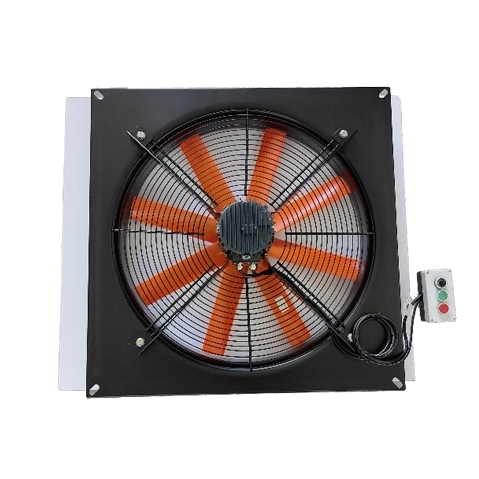
EC Motor Axial Fans are fans driven by electronically commutated motors, which are essentially DC motors with built-in AC to DC conversion. The EC motor integrates the motor, electronics, and controls into a compact unit, providing high efficiency and precise speed control. This integration allows the fan to adjust its speed according to the ventilation needs, providing significant energy savings.
At the core of EC motors is the use of permanent magnets and electronic controllers. Unlike traditional AC motors that rely on mechanical commutation, EC motors use electronic switching, reducing energy losses and wear. The built-in inverter and controller allow for variable speed control, enabling the motor to run at optimum efficiency across a range of operating conditions.
Axial fans move air along the axis of the fan, providing high flow rates at low pressures. They are commonly used in applications where a large volume of air needs to be moved over a short distance, such as ventilation, exhaust, and cooling systems. The combination of axial fan design with EC motor technology results in a highly efficient and versatile ventilation solution.
EC Motor Axial Fans offer several benefits over traditional AC motor fans, making them increasingly popular in modern ventilation systems.
One of the most significant advantages is their superior energy efficiency. EC motors can achieve efficiencies of up to 90%, compared to around 75% for conventional AC motors. This high efficiency is due to the electronic control and the use of permanent magnets, which reduce energy losses.
The built-in electronic controls allow for precise variable speed adjustments. This means the fan can adjust its speed to match the exact ventilation requirements at any given time, further reducing energy consumption and enhancing performance.
EC motors have fewer moving parts than traditional motors, leading to reduced wear and tear. The absence of brushes and mechanical commutators means less maintenance and longer motor life, resulting in lower operating costs over time.
The integration of the motor and control electronics into a single unit allows for a more compact and lightweight design. This is particularly beneficial in applications where space is limited or weight is a critical factor.
With global energy demands increasing and a heightened awareness of environmental issues, the efficiency of ventilation systems has become a focal point. EC Motor Axial Fans contribute significantly to sustainability efforts.
By operating at higher efficiencies and allowing for variable speed control, these fans consume less energy than their traditional counterparts. Studies have shown that replacing AC fans with EC fans can result in energy savings of up to 50%, depending on the application and usage patterns.
Reduced energy consumption translates directly into lower carbon emissions, as less electricity generation is required. This makes EC Motor Axial Fans an environmentally friendly choice, aligning with global initiatives to combat climate change.
Regulatory bodies worldwide are implementing stricter energy efficiency standards. Using EC Motor Axial Fans ensures compliance with current and future regulations, avoiding potential penalties and contributing to corporate sustainability goals.
The versatility of EC Motor Axial Fans makes them suitable for a wide range of applications across various industries.
In HVAC systems, these fans provide efficient air movement and precise control over ventilation rates. Their ability to adjust speed in response to temperature and occupancy levels enhances indoor air quality and comfort while minimizing energy use.
Cooling is critical in data centers to prevent equipment overheating. EC Motor Axial Fans offer efficient cooling solutions with precise control, essential for maintaining optimal operating conditions and reducing energy costs in these energy-intensive facilities.
Manufacturing processes often generate heat and contaminants that require effective ventilation. EC fans provide reliable and adjustable airflow to maintain safe and comfortable working environments, improving worker safety and product quality.
In agriculture, controlling the environment within animal housing and greenhouses is vital. EC Motor Axial Fans help regulate temperature and humidity levels, promoting animal welfare and crop productivity while reducing energy consumption.
Real-world applications highlight the tangible benefits of EC Motor Axial Fans. For instance, a study conducted in a large commercial building demonstrated a 40% reduction in energy costs after replacing traditional fans with EC models. Additionally, the facility reported improved climate control and reduced noise levels.
An industrial plant implemented EC fans in its ventilation system, resulting in a 30% decrease in energy consumption. The variable speed control allowed the system to adjust to production levels, optimizing airflow and reducing unnecessary energy use during off-peak times.
A data center facing high cooling costs adopted EC Motor Axial Fans, achieving a significant reduction in energy usage. The fans' precise control contributed to maintaining ideal operating temperatures, enhancing equipment longevity and performance.
While EC Motor Axial Fans offer numerous benefits, there are challenges to consider. The initial cost is higher compared to traditional fans, which can be a barrier for some projects. However, the long-term energy savings and reduced maintenance costs often offset the initial investment.
Ongoing research and development are focused on further improving the efficiency and capabilities of EC motors. Innovations in materials, electronics, and manufacturing processes are expected to reduce costs and enhance performance, making the technology more accessible.
The future of ventilation includes integration with smart building systems. EC Motor Axial Fans can be connected to building management systems, allowing for automated control based on real-time data from sensors, weather forecasts, and occupancy levels.
EC Motor Axial Fans represent a significant advancement in ventilation technology, offering superior energy efficiency, control, and sustainability. As industries and societies move towards greener practices, the adoption of such technologies becomes imperative. The initial investment in EC fans is justified by the long-term benefits of reduced energy consumption, lower operating costs, and compliance with environmental regulations.
For organizations aiming to upgrade their ventilation systems, embracing EC Motor Axial Fans is a strategic move towards future-proofing their operations. With continuous advancements and increasing affordability, these fans are set to become the standard in ventilation solutions, underscoring their role as the future of the industry.
Investing in technologies like the EC Motor Axial Fan not only contributes to immediate operational improvements but also aligns with broader environmental and sustainability goals. As we look towards a future that demands more efficient and responsible use of resources, EC Motor Axial Fans stand out as a crucial component in achieving these objectives.


