


Views: 0 Author: Site Editor Publish Time: 2026-08-18 Origin: Site


Ventilation systems often waste energy by moving more air than needed. They can also create excess noise and operating costs. An EC Centrifugal Fan addresses these issues through efficient motor control and adjustable airflow. In this article, you will learn its main advantages, practical applications, and value compared with traditional fan solutions.
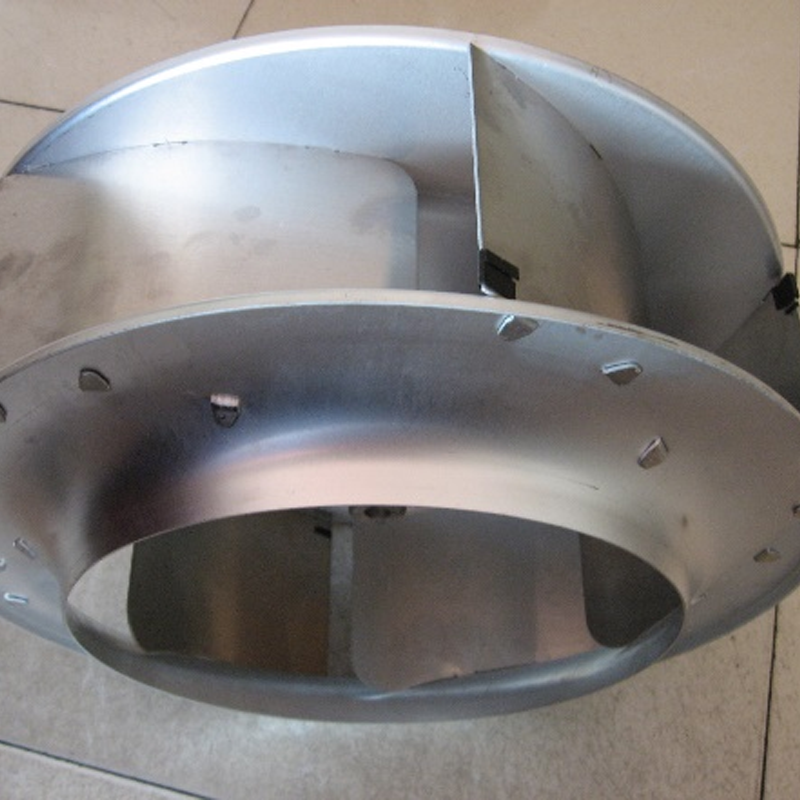
● An ec centrifugal fan combines efficient EC motor technology with centrifugal airflow performance.
● Variable-speed operation allows airflow to follow actual system demand instead of remaining fixed.
● Electronic control can reduce unnecessary power consumption during partial-load operation.
● Centrifugal airflow is useful where ducts, filters, coils, or equipment create resistance.
● Common control options can include 0–10V, PWM, and digital communication.
● Compact designs make these fans easier to integrate into ventilation and cooling equipment.
● Controlled speed and optimized impeller design can help reduce operating noise.
● Brushless construction and integrated protection features support reliable operation.
● Typical applications include HVAC equipment, air handling units, cabinets, data centers, cleanrooms, and industrial ventilation.
An EC Centrifugal Fan offers more than efficient air movement. Its main value comes from combining airflow performance, electronic control, and flexible system integration.
Advantage | Practical Value |
Higher efficiency | Reduces unnecessary electrical consumption |
Variable-speed control | Matches airflow to changing demand |
Strong static pressure | Handles ducts, filters, and system resistance |
Lower noise potential | Avoids unnecessary full-speed operation |
Compact integration | Fits equipment and restricted spaces |
Long operating life | Supports continuous-duty ventilation systems |
These advantages make EC centrifugal technology useful across HVAC, industrial ventilation, equipment cooling, data centers, and precision airflow systems.
Traditional fixed-speed fans can consume unnecessary energy when maximum airflow is not required. An EC fan can reduce motor speed as system demand falls.
This approach limits unnecessary air movement. It also allows the system to operate closer to the actual airflow requirement. That is especially useful in applications where ventilation demand changes throughout the day.
Speed control is one of the strongest advantages of an EC Centrifugal Fan. Many configurations can accept control signals such as 0–10V or PWM. Suitable systems may also support digital communication.
The controller changes motor speed electronically. This makes airflow easier to match with real operating conditions. It can also simplify integration into automated ventilation systems.
Centrifugal fans are well suited to systems where airflow faces resistance. Common resistance sources include ducts, filters, coils, dampers, and enclosed equipment.
The centrifugal impeller develops pressure needed to move air through these restrictions. This makes the technology suitable for ducted HVAC, air handling equipment, filtration systems, and many industrial ventilation applications.
A fan does not always need to run at maximum speed. Reducing speed during lower demand can also reduce unnecessary operating noise.
Impeller geometry and balanced rotation also affect acoustic performance. When these features are combined with variable-speed control, the fan can provide a better balance between airflow and sound levels.
Space is often limited inside air handling units, control cabinets, and cooling systems. A compact fan can simplify equipment layouts and enclosure design.
EC centrifugal fans can be designed around different voltage, mounting, housing, and control requirements. This flexibility makes them easier to integrate into both new equipment and customized ventilation systems.
EC motors use brushless electronic commutation. This reduces mechanical wear associated with brush-based motor designs.
Depending on the configuration, protection functions can include soft start, current limiting, reverse-polarity protection, and locked-rotor protection. These features help protect the motor during demanding operating conditions.
Tip:Compare complete performance curves instead of selecting a fan only by maximum airflow.
Energy consumption becomes especially important when ventilation equipment operates for many hours. Even a moderate efficiency improvement can create meaningful savings during continuous operation.
Building loads rarely remain constant throughout the day. Temperature, occupancy, equipment heat, and outdoor conditions can all change airflow requirements.
An EC Centrifugal Fan can respond by changing motor speed. The system therefore avoids producing maximum airflow when the application only needs partial output.
Consider an air handling unit during periods of lower cooling demand. A fixed-speed solution may continue moving more air than needed unless another control method restricts it.
A power-saving EC centrifugal fan for HVAC can adjust output according to changing system requirements. This helps reduce unnecessary power use while maintaining the airflow needed for stable operation.
The benefit becomes more important when the fan spends much of its working life below full load.
Energy efficiency becomes especially valuable in commercial HVAC and equipment cooling. The same principle applies to telecom cabinets, server environments, and industrial ventilation.
These applications may operate for long periods each day. Buyers should therefore consider annual energy use instead of looking only at the initial fan cost.
Note:Estimate lifecycle energy consumption using expected operating hours and realistic partial-load conditions.
Electronic control provides more than energy savings. It also gives engineers greater control over airflow behavior.
Different installations use different control architectures. EC fan systems can use analog or pulse-based speed commands, while suitable configurations may support digital communication.
This flexibility helps the fan work with control panels, automation equipment, or building management systems.
Temperature sensors can request more airflow as equipment becomes hotter. Pressure sensors can help compensate for changing system resistance.
Other systems may respond to humidity or occupancy conditions. This lets airflow follow real ventilation needs rather than staying at one fixed setting.
Filters gradually collect dust and increase resistance. Dampers can also change position during operation.
A controllable fan can adjust its output when these conditions change. This is useful where stable airflow matters more than maximum fan capacity.
Precision ventilation, cleanroom systems, and electronics cooling can benefit from this type of control.
Moving air through open space differs from moving it through installed equipment. Real ventilation systems contain many components that resist airflow.
Long ducts create friction. Filters, heat exchangers, bends, and dampers add further resistance.
A centrifugal fan develops useful pressure to overcome these restrictions. This makes it suitable for HVAC equipment, air handling units, filtration systems, and industrial exhaust arrangements.
Backward-curved centrifugal impellers are often used for pressure-focused ventilation designs. Their aerodynamic shape can support efficient airflow through ducted systems.
This type of design is useful where air must move through filters, equipment, or longer sections of ductwork.
A high free-air rating does not guarantee strong installed performance. Once system resistance increases, actual airflow can change significantly.
Engineers should therefore identify the required operating point. Airflow and static pressure need to be evaluated together.
This reduces the risk of oversizing or undersizing the fan.
Purchase price is only one part of fan economics. Electricity, maintenance, downtime, and replacement costs also influence long-term value.
Maximum fan speed is not required at every moment. Variable-speed control allows the fan to operate more slowly during periods of lower demand.
Reduced speed can improve comfort in occupied spaces. Impeller balance and aerodynamic design also play important roles in overall noise performance.
This matters in offices, commercial buildings, laboratories, medical spaces, and other noise-sensitive environments.
Continuous operation places stress on motors and electronics. Integrated protection can help manage abnormal operating conditions.
Available functions may include soft starting, current limiting, locked-rotor protection, and reverse-polarity protection.
These functions help protect fan components during electrical or mechanical problems. They can also support more reliable operation in demanding equipment.
A brushless motor can reduce routine service requirements. Electronic speed control may also remove the need for some mechanical speed-control components.
The financial benefit depends on the application. Buyers should compare initial price, power use, expected operating hours, maintenance needs, and possible downtime.
Tip:Request airflow, pressure, power, noise, and control data before comparing supplier quotations.
The same fan advantage can create different value across different applications. Efficiency may dominate one project, while pressure or control accuracy matters more in another.
HVAC systems often experience changing airflow demand. They also contain filters, coils, dampers, and duct networks.
An EC Centrifugal Fan can provide adjustable airflow while handling system resistance. It can also work as part of an automated ventilation strategy.
This combination can support energy management while maintaining required indoor airflow.
Electronic equipment generates heat inside limited spaces. Reliable airflow helps remove that heat before internal temperatures rise too far.
Compact centrifugal fans can support cabinet cooling, telecom equipment, server systems, and industrial automation equipment.
Their variable-speed capability also allows airflow to increase when thermal demand becomes higher.
Some environments require stable airflow instead of maximum airflow. Cleanrooms, laboratories, and electronics production are common examples.
EC control can help maintain a defined operating condition when system pressure changes. Compact construction also supports integration into specialized ventilation equipment.
The result is more precise control over airflow where process stability matters.
Industrial sites may need temporary exhaust, equipment cooling, or mobile ventilation. Warehouses may also require additional air circulation in selected zones.
Centrifugal designs can combine pressure capability, compact construction, and adjustable airflow. Suitable configurations can support ducted ventilation and other demanding industrial conditions.
Choosing between EC and conventional AC technology requires more than comparing maximum airflow. The right choice depends on how the complete system operates.
Start with the required airflow and static pressure. Then review energy consumption across expected operating conditions.
Noise, dimensions, control method, voltage, and installation requirements also matter. Maintenance access should also be considered.
A fan offering impressive maximum airflow may still perform poorly at the actual system resistance.
EC technology becomes attractive when airflow demand changes regularly. It is also useful when precise fan-speed control is required.
Long-running HVAC systems can benefit from better efficiency. Automated equipment can benefit from electronic speed commands.
Noise-sensitive installations may gain additional value because the fan does not need to operate at full speed constantly.
An EC fan may require a different initial investment than a basic fixed-speed solution. However, purchase price does not show the complete economic picture.
Energy consumption can accumulate across thousands of operating hours. Maintenance and downtime also influence long-term costs.
For high-duty systems, a lifecycle comparison usually provides a more meaningful purchasing decision.
The main EC centrifugal fan advantages include efficiency, precise control, strong pressure performance, low-noise potential, compact installation, and reliable operation. These strengths support HVAC, cooling, and industrial ventilation systems. Dowell provides EC centrifugal fan solutions with flexible controls and customization support. Its products can help users balance airflow, energy use, noise, integration, and long-term operating value.
A: An EC Centrifugal Fan combines electronic motor control with centrifugal airflow.
A: An EC Centrifugal Fan can reduce speed when airflow demand falls.
A: An EC Centrifugal Fan can use 0–10V, PWM, or suitable digital controls.
A: An EC Centrifugal Fan offers greater control in variable-demand systems.
A: Initial costs vary, so buyers should compare total lifecycle expenses.
A: Check filters, ducts, controls, system resistance, and fan selection.


