


Views: 240 Author: Site Editor Publish Time: 2025-10-16 Origin: Site


Centrifugal fans drive modern ventilation, and EC technology boosts efficiency and control. An EC centrifugal fan saves energy and reduces noise, while an EC Axial Fan moves air along the axis. In this article, you will learn their design, benefits, and key applications.
An EC centrifugal fan uses a brushless, electronically commutated motor (ECM) to drive a centrifugal impeller. Air enters through the fan's center and is pushed outward by spinning blades. The ECM ensures variable speed control, reducing energy usage compared to traditional AC fans.
Unlike AC fans that run at a fixed speed, EC fans adapt in real time, maintaining required airflow without unnecessary power consumption. This makes them ideal for HVAC, data centers, industrial ventilation, and laboratory environments.
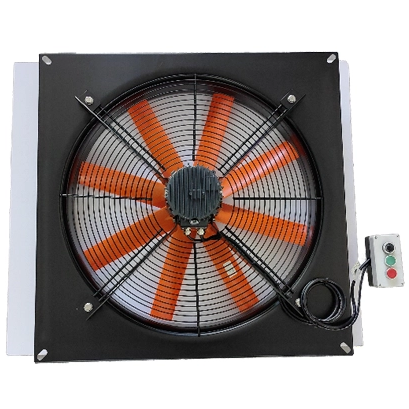
For comparison, an EC Axial Fan moves air in a straight line along the fan’s axis, making it more suitable for high-volume, low-pressure applications, while centrifugal fans handle higher pressures and ducted systems efficiently.
Tip: For facilities requiring both high airflow and high static pressure, pairing EC centrifugal fans with EC Axial Fans in separate zones can optimize overall energy usage.
1. Electronically Commutated Motor (ECM):
● Brushless design reduces friction and wear
● Controls speed electronically for efficiency
● Adjusts output based on load, airflow, and temperature
● Monitors power consumption and provides feedback to control systems
2. Impeller:
● Curved blades generate radial airflow
● Increases air pressure for ducts and filters
● Optimized for quiet operation and minimal vibration
3. Housing Design:
● Guides airflow efficiently
● Reduces turbulence and energy loss
● Protects internal components from dust and debris
4. Smart Control Systems:
● Enables variable speed operation
● Integrates with building management systems (BMS) or industrial controllers
● Provides real-time monitoring and predictive maintenance alerts
Note: Selecting a fan with built-in diagnostics simplifies maintenance, especially in large industrial facilities where downtime is costly.
EC motors bring significant advantages over traditional AC or DC motors:
● Energy efficiency: Only consumes power as needed, reducing wasted energy
● Variable speed control: Adjusts airflow dynamically to match environmental requirements
● Noise reduction: Smooth brushless operation minimizes vibration and sound
● Longevity: Fewer moving parts reduce mechanical wear, extending operational life
Compared to AC motors, EC motors achieve up to 50% energy savings in typical HVAC and industrial applications [data verification needed]. They also outperform DC motors in reliability, particularly for 24/7 operations such as server rooms and medical ventilation systems.
Tip: When choosing between centrifugal and axial EC fans, consider motor efficiency under full and partial load, as this impacts long-term operating costs significantly.
EC centrifugal fans excel in reducing energy consumption through variable speed technology. By adjusting airflow to actual demand, they prevent energy waste during low-load periods.
● Cuts electricity bills over time
● Reduces peak power draw
● Supports sustainable building initiatives and energy certifications
In industrial systems, an EC centrifugal fan can operate at 40–70% of maximum speed during off-peak hours, maintaining airflow without overconsuming energy. This translates into significant yearly savings.
EC fans operate quietly due to brushless motors and low-vibration impellers. This is crucial for sensitive environments like offices, hospitals, and data centers.
● Noise levels can be reduced by up to 40% compared to conventional fans
● Smooth operation extends equipment life, lowering maintenance costs
Note: For B2B facilities such as hospitals, quiet operation reduces disturbances, improving employee and patient comfort.
EC centrifugal fans fit in tight spaces without compromising performance. They can be installed horizontally or vertically, making them adaptable for industrial and residential use.
● Lightweight design allows easy installation
● Suitable for small vents, complex ductwork, and retrofit projects
● Works effectively in constrained or crowded spaces
Tip: Compact EC centrifugal fans allow retrofitting into existing systems without extensive duct modification, saving time and installation cost.
Modern EC centrifugal fans include smart controls, enabling:
● Real-time speed adjustments based on temperature, airflow, or occupancy
● Integration with building management or industrial automation systems
● Energy monitoring and predictive maintenance alerts
These features reduce operational complexity, improve energy efficiency, and provide actionable data for facilities managers.
Feature | EC Centrifugal Fan | EC Axial Fan |
Airflow Direction | Radial (outward) | Axial (straight-line) |
Pressure Handling | High static pressure | Low static pressure |
Ideal Applications | Ducted HVAC, industrial ventilation | Open-air ventilation, cooling electronics |
Noise Levels | Moderate to low | Generally lower at low pressure |
● Efficiency: Centrifugal fans excel in high-pressure systems, axial fans are more efficient in free-flow conditions
● Noise & Vibration: Centrifugal fans produce moderate sound at high pressure, axial fans remain quiet in open spaces
● Versatility: Centrifugal fans fit complex duct networks, axial fans suit direct exhaust or intake
● EC motors reduce maintenance needs but require periodic inspection of controllers and sensors
● Bearings and impeller balance should be checked regularly
● Remote monitoring simplifies diagnostics and reduces downtime
Tip: For large facilities, using fans with IoT-enabled EC controllers allows predictive maintenance, saving operational costs and avoiding unexpected shutdowns.
● Residential and commercial heating and cooling
● Efficient integration with smart thermostats
● Reduces operational costs while maintaining comfort
● Factories, warehouses, and manufacturing lines
● Dust, fumes, and heat extraction
● Maintains safe and consistent air quality
● Keeps server racks cool
● Provides stable airflow to prevent overheating
● Quiet operation reduces ambient noise
● Cleanrooms, fume hoods, and sterile labs
● Controls temperature, humidity, and particle levels
● Reduces infection risks in hospitals and research labs
● Semiconductor manufacturing for precise airflow control
● Automotive ventilation for engine or cabin cooling
● Any environment requiring controlled pressure and high airflow reliability
Note: EC Axial Fans are excellent complements in low-pressure, high-volume areas, while centrifugal fans maintain performance in ducted, high-resistance systems.
● Evaluate airflow, pressure, and heat load
● Consider environmental factors such as temperature, dust, and vibration
● Match fan performance to operational needs
● Check available space and mounting options
● Confirm clearance for airflow and maintenance
● Consider weight and installation requirements
● Horizontal and vertical installations may require different fan sizes
● Variable speed essential for energy savings and airflow control
● Integration with software and monitoring tools ensures efficiency and reduces downtime
Tip: Fans with programmable controllers allow automatic adjustment to changing operational conditions, maximizing energy savings.
● EC fans cost more than conventional AC fans
● Investment is justified by long-term energy savings and extended lifespan
● Electronics and motors require periodic checks
● Skilled technicians may be necessary for repairs
● Extreme heat, dust, or vibration may affect performance
● Not ideal for abrasive or corrosive environments
● Fan selection must consider application-specific risks
EC centrifugal fans offer precise airflow, low noise, and energy savings. They suit HVAC, industrial, and medical spaces. EC Axial Fans complement them in low-pressure areas. Suzhou Dowell Ventilation Technology Co., Ltd provides high-quality fans that enhance efficiency, reliability, and long-term value.
A: It’s a fan with a brushless motor that provides energy-efficient, quiet, and precise airflow.
A: EC centrifugal fans push air radially for high-pressure ducts, while EC Axial Fans move air straight for low-pressure areas.
A: It saves energy, reduces noise, and adapts speed to demand, improving efficiency in HVAC and industrial systems.
A: They are ideal for HVAC, factories, data centers, and medical labs. EC Axial Fans suit open-air or low-pressure applications.
A: Energy savings, low noise, long lifespan, and smart control make them cost-effective and reliable.
A: They perform well under standard industrial conditions but may require protection in extreme heat or dust.


