


Views: 286 Author: Site Editor Publish Time: 2025-10-07 Origin: Site


Air movement is critical for industries and homes. Traditional AC fans have limitations like high energy use and noise. An EC Axial Fan combines brushless DC technology with AC input. It delivers precise airflow, lower energy consumption, and quieter operation. In this article, you will learn how an EC axial fan works, its key benefits, common applications, and tips for selecting the right fan for your system.
An EC axial fan is an advanced type of fan that uses a brushless electronically commutated motor. Unlike conventional AC or DC fans, it converts AC input to DC internally, combining the energy efficiency of a DC motor with the flexibility of AC input.
● AC Fans: Operate directly on alternating current. Speed control typically requires an external Variable Frequency Drive (VFD). Efficiency is moderate, around 50–70%.
● DC Fans: Require a DC supply or AC-to-DC conversion, offering higher efficiency but limited flexibility for retrofits.
● EC Axial Fans: Accept AC input and internally convert it to DC, enabling high efficiency, variable speed control, and smart system integration.
1. Rotor: Rotates to drive airflow and generate pressure.
2. Stator: Contains windings that produce the magnetic field to turn the rotor.
3. Electronic Controller: Manages brushless commutation, adjusts speed, and monitors energy consumption.
4. Fan Blades: Aerodynamically shaped to reduce turbulence, improve airflow efficiency, and minimize noise.
Brushless commutation eliminates brushes, preventing wear and electrical arcing. This results in longer operational life, smoother rotation, and more consistent airflow.
By converting AC to DC internally, EC axial fans can achieve efficiencies up to 90%, which is significantly higher than traditional AC fans. This reduction in power consumption translates into lower operating costs over the fan’s lifecycle.
EC axial fans are available in multiple sizes, ranging from 80mm to 350mm, suitable for various industrial and commercial installations. Some models offer modular mounting options, allowing them to be installed in tight spaces or integrated with duct systems.
Tip: Choosing the correct size and configuration for your application can reduce energy use by up to 30% and prevent overloading the motor.
EC axial fans integrate mechanical design and electronic control to deliver efficient airflow.
Air moves axially along the fan shaft, following the direction of the blades. This design minimizes turbulence and allows for higher volumetric airflow compared to comparable AC fans. Blade geometry and inlet cones further optimize airflow by reducing drag and noise.
EC axial fans include built-in electronics that allow precise speed adjustments in real-time. This feature enables the fan to respond to system demand changes instantly, eliminating the need for an external VFD.
● The internal controller automatically regulates speed and power consumption.
● No additional VFD reduces installation complexity and saves space.
● Allows integration with automation and IoT systems for intelligent ventilation control.
EC axial fans generate airflow and static pressure efficiently.
● Airflow: Measured in m³/h or CFM.
● Pressure: Measured in Pa, mmH₂O, or inH₂O.
● Blade design and rotor speed are optimized to maintain consistent airflow under varying system loads.
EC axial fans adjust their speed automatically based on temperature, system load, or sensor input. This dynamic response ensures constant performance while minimizing energy waste.
Brushless operation reduces vibration and hum. Aerodynamic blades further minimize turbulence-induced noise, making EC axial fans suitable for noise-sensitive environments.
Note: Variable speed EC fans can maintain airflow requirements while consuming 20–40% less energy than AC fans operating at constant speed.
EC axial fans offer numerous advantages over traditional AC or DC fans, making them suitable for a wide range of applications.
EC axial fans typically consume 30–50% less energy than conventional AC fans. Reduced energy use directly lowers operational costs, especially in systems running 24/7.
Variable speed operation allows precise control of airflow and pressure. This feature is essential in data centers, laboratories, and cleanrooms, where even small airflow changes can affect temperature and air quality.
Smooth brushless operation reduces vibration and noise. EC axial fans are ideal for offices, hospitals, restaurants, and other noise-sensitive areas.
Smaller form factors and modular construction allow installation in tight spaces, duct systems, and existing ventilation setups. Multiple mounting orientations increase installation flexibility.
Fewer moving parts and the absence of brushes reduce wear and tear. EC axial fans typically have longer lifespans and lower maintenance requirements than AC or DC fans.
Most EC axial fans support PWM or 0–10V control signals, enabling integration with building management systems (BMS) and IoT platforms. This allows automated airflow adjustments and predictive maintenance.
Tip: Integrating EC axial fans with smart sensors can reduce energy consumption by 15–25% while maintaining optimal air quality.
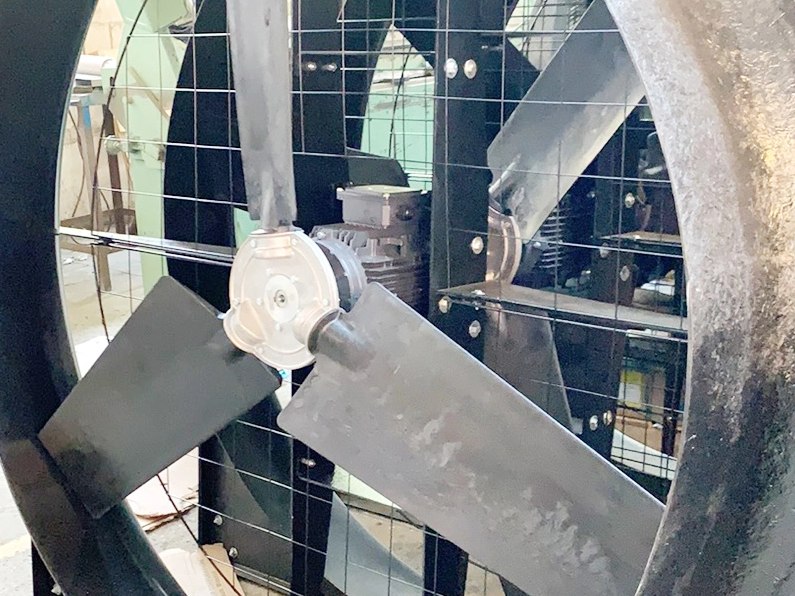
EC axial fans are versatile and can be applied in various industrial, commercial, and residential contexts.
● Data Centers: Maintain precise cooling for servers and electronic equipment.
● Cleanrooms: Provide controlled airflow for contamination-sensitive manufacturing.
● Industrial Machinery: Ventilate machines to prevent overheating and extend equipment lifespan.
● HVAC Systems: Improve air circulation in offices, shopping centers, and hospitals.
● Restaurants and Kitchens: Efficiently remove heat, smoke, and odors.
● Auditoriums and Conference Rooms: Reduce noise while maintaining airflow.
● Home ventilation for energy-conscious households.
● Small-scale server racks or electronics cooling in private offices or labs.
● Maintain uniform temperature in storage units.
● Reduce frost build-up by circulating cold air efficiently.
● EC axial fans can communicate with smart sensors and automation systems to adjust airflow based on occupancy, temperature, or air quality.
Note: Automated airflow control can prevent energy waste and improve compliance with environmental regulations in commercial buildings.
Monitoring EC axial fan performance ensures efficiency and longevity.
● Airflow: Measured in cubic meters per hour (m³/h) or cubic feet per minute (CFM).
● Pressure: Measured in Pascal (Pa), mmH₂O, or inH₂O.
● Track energy usage to evaluate efficiency.
● EC axial fans consume less power for the same airflow compared to AC fans.
● Airflow vs. pressure curves help select the right model.
● Consider system resistance, duct length, bends, and obstacles that impact performance.
● Temperature, dust, and humidity affect fan performance.
● Proper installation, including alignment and duct sealing, is critical.
Tip: Installing EC axial fans in clean, dust-free environments and ensuring correct duct alignment can improve efficiency by up to 20%.
Despite advantages, EC axial fans have some limitations:
● Higher Initial Cost: EC fans are more expensive upfront than AC fans, but savings accrue over the lifecycle.
● Installation Requirements: Proper mounting, heat dissipation, and electrical protection are critical.
● Environmental Sensitivity: Extreme temperatures, dust, or direct sunlight can reduce performance.
● Model Selection: Matching airflow, pressure, and environmental compatibility is essential.
Tip: Include installation, protective measures, and environmental controls in your budget to maximize ROI and reduce downtime.
Feature | EC Axial Fan | AC Fan | DC Fan |
Efficiency | Up to 90% | 50–70% | Moderate |
Speed Control | Built-in | Requires VFD | External |
Noise | Low | Higher | Moderate |
Maintenance | Minimal | Frequent | Moderate |
Input | AC | AC | DC |
Lifecycle Cost | Lower | Higher | Moderate |
Decision Factors:
● EC fans reduce operating costs in energy-sensitive applications.
● Low-noise environments benefit from EC fan integration.
● Retrofit systems favor EC fans due to AC input compatibility and smart integration.
An EC axial fan is energy-efficient and highly reliable. It combines AC input with brushless DC technology. It offers variable speed, low noise, and smart control. Suzhou Dowell Ventilation Technology Co., Ltd provides these fans with compact design and high performance. They save energy, reduce costs, and require minimal maintenance, delivering strong value for industrial and commercial applications.
A: An EC Axial Fan is a brushless, energy-efficient fan that combines AC input with DC motor technology for precise airflow.
A: It converts AC to DC internally, uses electronic commutation, and adjusts speed based on system demand.
A: EC axial fans are more efficient, quieter, and require less maintenance than standard AC fans.
A: They are used in industrial HVAC, data centers, cleanrooms, refrigeration, and commercial ventilation.
A: Yes, they reduce electricity use and maintenance, providing long-term savings despite higher upfront costs.
A: Check for dust, proper wiring, and correct installation. Most issues stem from airflow obstructions or voltage problems.
A: Yes, it supports PWM and 0–10V control signals for building management or IoT systems.


