


Electronically Commutated (EC) motors have gained significant attention in various industries due to their efficiency and advanced control capabilities. Designed as three-phase motors, EC motors utilize a unique combination of permanent magnets and electronic commutation to optimize performance. This article explores the structure, advantages, and applications of EC motors, shedding light on their three-phase configuration and how they compare to traditional motor types. Understanding these aspects is crucial for industries looking to enhance energy savings and operational efficiency.
Electronically Commutated (EC) motors are brushless DC motors designed like three-phase synchronous machines. They consist of a stator with three separate windings arranged in a three-phase system. The rotor contains permanent magnets, which interact with the stator's magnetic field to produce motion. Unlike traditional DC motors, EC motors require an electronic controller to manage the current flow and rotor position, replacing mechanical brushes and commutators. This controller converts single-phase AC power into the appropriate three-phase signals needed to drive the motor windings.
Permanent magnets on the rotor are crucial for EC motors. They create a constant magnetic field that interacts with the stator's electromagnetic field generated by the three-phase windings. This interaction ensures synchronous rotation, meaning the rotor spins in sync with the rotating magnetic field. The use of permanent magnets reduces energy losses, improves efficiency, and allows for precise speed and torque control. Because the rotor does not require induced current, EC motors avoid the slip losses typical in induction motors.
Compared to traditional AC and brushed DC motors, EC motors blend advantages from both. AC motors use an alternating current to create a rotating magnetic field but suffer from slip losses and less efficient speed control. Brushed DC motors allow straightforward speed control but require maintenance due to brush wear. EC motors eliminate brushes and use electronic commutation, offering higher efficiency and reliability.
A key difference lies in power supply and control:
● AC Motors: Usually powered by three-phase AC directly, with speed controlled by frequency variation.
● Brushed DC Motors: Powered by DC voltage, speed controlled by voltage variation or PWM.
● EC Motors: Powered by single-phase AC converted internally to three-phase DC, speed controlled electronically by adjusting the commutation frequency.
In essence, EC motors are three-phase motors because their stator windings are arranged in a three-phase configuration. The electronic controller synthesizes the necessary three-phase power from a single-phase supply, enabling smooth and efficient operation.
EC motors use an internal electronic controller to convert single-phase input into three-phase power, enabling precise speed control and high efficiency in a compact design.
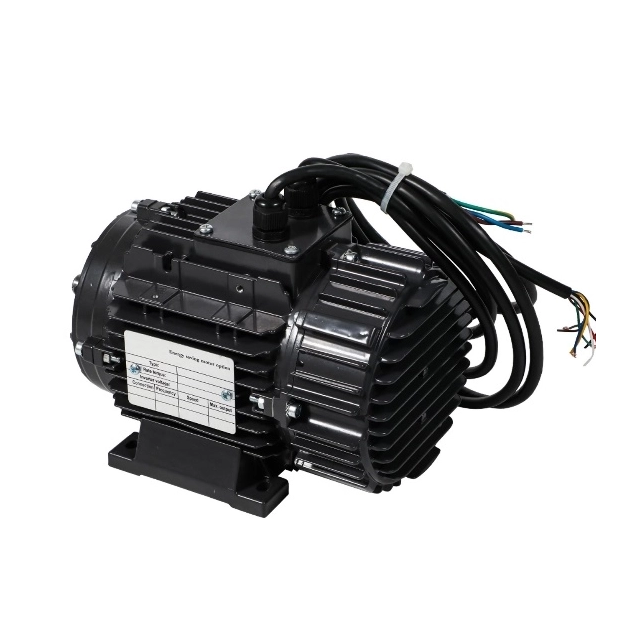
Electronically Commutated (EC) motors combine several key components to achieve their high efficiency and precise control. These components work together to convert single-phase AC power into a controlled three-phase output that drives the motor. The main parts include the circuit board, electronic control module, and the three-phase motor itself.
The circuit board in an EC motor system acts as the central hub for controlling motor operation and integrating with other system components. It often shares space with other HVAC or industrial system controls, managing functions such as airflow or temperature settings. On the board, dip switches and jumper pins allow technicians to customize motor behavior for specific applications. For example, they can adjust fan speed or response characteristics to match heating or cooling demands. This flexibility helps optimize performance and energy use.
This module is the heart of the EC motor’s electronic commutation process. It converts the incoming single-phase AC power into a three-phase DC power supply that the motor windings require. Acting as a power inverter, it pulses DC voltage to the motor coils in a precise sequence, ensuring smooth rotation of the rotor. The control module can vary the frequency of these pulses, directly controlling motor speed independently of the utility frequency. This capability allows the motor to run efficiently at different speeds, reducing energy consumption and mechanical stress.
The motor itself is a three-phase brushless DC design. Its stator contains three separate windings arranged in a three-phase configuration, while the rotor is equipped with permanent magnets. The interaction between the stator’s electromagnetic field and the rotor magnets produces synchronous rotation. The three-phase setup enables smooth torque delivery and reduces vibrations compared to single-phase motors. Because the motor windings receive electronically generated three-phase power, the motor can achieve high efficiency and precise speed control.
The integration of the circuit board, electronic control module, and three-phase motor in EC motors allows seamless conversion of single-phase AC power into efficient three-phase operation, enabling precise speed control and energy savings in various applications.
Electronically Commutated (EC) motors offer several advantages that make them highly desirable in modern applications. Their design and control technology provide improvements in efficiency, cost, and operational characteristics compared to traditional motors.
EC motors are renowned for their superior efficiency. By electronically converting single-phase AC power into three-phase DC power, they optimize the motor’s operation. The use of permanent magnets on the rotor eliminates slip losses common in induction motors. This results in less wasted energy and higher overall efficiency, often reaching up to 80% or more, compared to about 60% for traditional permanent split capacitor (PSC) motors.
Additionally, EC motors can precisely control speed through electronic commutation. This allows them to operate efficiently at various speeds without the typical efficiency drop seen in AC motors at reduced speeds. Their ability to ramp speed smoothly reduces mechanical stress and power surges during startup, enhancing performance and reliability.
One of the biggest benefits of EC motors is their low operating cost. Their high efficiency means they consume less electricity, lowering energy bills significantly over time. Furthermore, EC motors run cooler, reducing heat loss and the risk of overheating, which can extend the lifespan of the motor and connected equipment.
Maintenance costs are also minimal because EC motors have no brushes or mechanical commutators that wear out. The electronic control module replaces these parts, eliminating the need for regular brush replacement and reducing downtime. Standard ball bearings used in EC motors contribute to long service life and heavy load capacity.
EC motors operate more quietly than traditional AC motors. Their smooth electronic commutation avoids the abrupt switching noise typical of brushed motors. This makes them ideal for applications where noise reduction is important, such as HVAC systems in residential or office environments.
Heat loss is also minimized because EC motors produce less wasted energy. The lower operating temperature reduces stress on motor components and surrounding systems, improving safety and reliability.
When selecting motors for HVAC or industrial systems, consider EC motors for their energy savings and reduced maintenance needs, which can significantly lower total cost of ownership over time.
Electronically Commutated (EC) motors have become popular across many industries because of their efficiency, control, and reliability. Their unique design—combining a brushless DC motor with an electronic controller—makes them a perfect fit for applications where energy savings, precise speed control, and quiet operation matter. Let’s explore some of the main areas where EC motors are widely used.
Heating, ventilation, and air conditioning (HVAC) systems benefit greatly from EC motors. They power fans, blowers, and pumps that move air or fluids efficiently. Because EC motors can vary their speed electronically, HVAC systems can adjust airflow precisely to match heating or cooling needs. This leads to significant energy savings compared to traditional motors that run at fixed speeds.
EC motors also run quieter and produce less heat, improving indoor comfort. Their ability to ramp speed gradually reduces mechanical stress and noise during startup and shutdown. Many modern air handlers and furnaces use EC motors to meet strict energy efficiency standards and reduce operating costs.
In industrial settings, EC motors drive conveyors, pumps, compressors, and other machinery that require reliable, variable-speed operation. Their high efficiency reduces power consumption, which lowers operational expenses in large-scale manufacturing plants.
EC motors’ brushless design means less maintenance and longer service life, critical for minimizing downtime in production lines. They also handle frequent starts and stops better than traditional motors, making them ideal for automated systems and robotics.
Though smaller in size, EC motors are increasingly found in consumer electronics like computer cooling fans, HVAC units in homes, and appliances such as refrigerators or washing machines. Their quiet operation and efficiency enhance user experience and help manufacturers meet energy regulations.
In devices where space is limited, EC motors’ compact design and integrated electronics simplify installation and control. Their ability to operate efficiently at various speeds extends battery life in portable electronics and reduces electricity costs in household appliances.
For businesses selecting motors in HVAC or industrial equipment, choosing EC motors can lead to substantial energy savings and reduced maintenance costs, improving long-term operational efficiency.
EC motors are more efficient than traditional AC and DC motors. They use permanent magnets on the rotor, which eliminates slip losses common in AC induction motors. This design reduces wasted energy and heat generation. While typical AC motors reach about 60% efficiency, EC motors often achieve efficiencies above 80%. Compared to brushed DC motors, EC motors avoid brush friction losses, leading to longer life and less maintenance. Their electronic commutation allows precise control of current and voltage, optimizing power use across different speeds.
Speed control in EC motors is more advanced than in AC or brushed DC motors. AC motors usually rely on adjusting supply frequency or voltage, which can cause efficiency drops and increased losses. Brushed DC motors control speed by varying voltage or pulse-width modulation (PWM), but brushes wear out over time, limiting reliability.
EC motors use an electronic controller to convert single-phase AC power into a three-phase output, adjusting the frequency and timing of pulses to the motor windings. This allows smooth, continuous speed variation without mechanical wear. The controller can rapidly respond to load changes, maintaining optimal speed and torque. This flexibility reduces energy consumption and mechanical stress on motor components.
EC motors generally last longer than AC and brushed DC motors. The absence of brushes and mechanical commutators eliminates common wear points found in brushed DC motors. EC motors also run cooler due to higher efficiency, reducing thermal stress on components.
Compared to AC motors, EC motors avoid slip-related losses that generate heat and wear. Their electronic control modules include protections that prevent damage from overloads or incorrect voltage, further enhancing durability. Standard ball bearings in EC motors support heavy loads and long operating hours.
When selecting motors for applications requiring variable speed and long service life, consider EC motors for their superior efficiency, precise electronic speed control, and reduced maintenance needs.
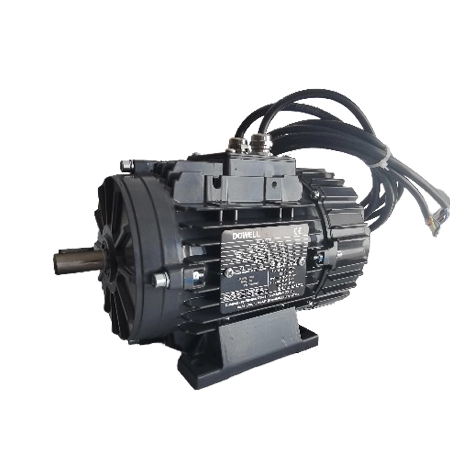
EC motors continue evolving rapidly due to advances in electronics and materials. Improvements in semiconductor technology allow more efficient and compact electronic control modules. These modules better convert single-phase AC into precise three-phase signals, enhancing motor responsiveness and reducing energy loss. New algorithms for motor control optimize commutation timing and speed regulation, boosting performance and reliability.
Permanent magnet materials also improve, offering stronger magnetic fields with less weight and cost. This leads to smaller, lighter motors without sacrificing power. Integration of sensors for rotor position and temperature monitoring enables smarter motor management, preventing overheating and wear.
Emerging trends include incorporating IoT connectivity into EC motors. This allows remote monitoring and predictive maintenance, reducing downtime and operational costs. Advanced diagnostics can alert operators before failures occur, improving system uptime.
Demand for EC motors grows steadily across industries. Energy efficiency regulations push manufacturers to adopt EC technology in HVAC, industrial, and consumer products. The motors’ low power consumption and precise speed control appeal to sectors focused on sustainability and cost reduction.
The HVAC market especially drives growth, as EC motors meet stringent efficiency standards and improve indoor air quality through quieter operation. Industrial automation benefits from EC motors’ durability and fine speed control, enabling more precise manufacturing processes.
Manufacturers increasingly offer EC motors with integrated electronics and standardized control interfaces. This simplifies installation and integration into complex systems. The trend toward compact, modular designs supports use in space-constrained applications.
Global supply chain improvements make EC motors more affordable and accessible. As a result, smaller businesses adopt this technology, expanding its market reach beyond large enterprises.
EC motors contribute significantly to reducing environmental footprints. Their high efficiency means less electricity consumption, lowering greenhouse gas emissions from power plants. Operating at variable speeds reduces wasted energy compared to fixed-speed motors running continuously at full power.
Because EC motors produce less heat and noise, they create more comfortable and safer environments. Reduced heat loss also decreases cooling requirements in buildings, further cutting energy use.
The longer lifespan and lower maintenance of EC motors reduce waste from discarded motors and spare parts. Additionally, advances in recyclable materials and eco-friendly manufacturing processes enhance their sustainability profile.
Increasing adoption of EC motors aligns well with global efforts to combat climate change and support renewable energy integration. Their ability to operate efficiently on variable power sources makes them suitable for hybrid and off-grid systems.
Stay updated on the latest EC motor technologies and market trends to select solutions that maximize energy savings, reduce operational costs, and support sustainability goals in your projects.
EC motors are three-phase motors with efficient electronic control, offering superior performance and energy savings. They excel in various applications, particularly in HVAC systems and industrial settings, due to their precise speed control and low maintenance needs. Leading EC Fan & centrifugal fan Manufacturer - Dowell offers EC motors that deliver exceptional value through reduced operational costs and environmental impact. For those seeking advanced motor solutions, exploring further into EC motors can provide significant benefits in efficiency and sustainability.
A: Yes, EC motors are designed as three-phase motors, with their stator windings arranged in a three-phase configuration, providing efficient and precise operation.
A: EC motors use an electronic control module to convert single-phase AC power into three-phase DC power, enabling efficient motor operation and speed control.
A: EC motors offer high efficiency, precise speed control, low maintenance, reduced noise, and energy savings, making them ideal for various applications.
A: EC motors use permanent magnets and electronic commutation, reducing energy losses and improving efficiency compared to traditional AC and brushed DC motors.


