


Views: 0 Author: Site Editor Publish Time: 2025-08-15 Origin: Site


When commercial building managers consider upgrading their air handling units (AHUs), energy efficiency, noise reduction, and long-term maintenance costs are key factors. Choosing the right fan can transform operational performance while reducing environmental impact. Suzhou Dowell Ventilation Technology Co., Ltd offers advanced EC Axial Fans designed for easy AHU retrofit, providing a modern alternative to traditional AC fans and delivering precise control and energy savings. In this guide, we explore how EC axial fans work, why retrofitting makes sense, and practical considerations for installation, commissioning, and lifecycle management, helping facility managers make informed upgrade decisions.
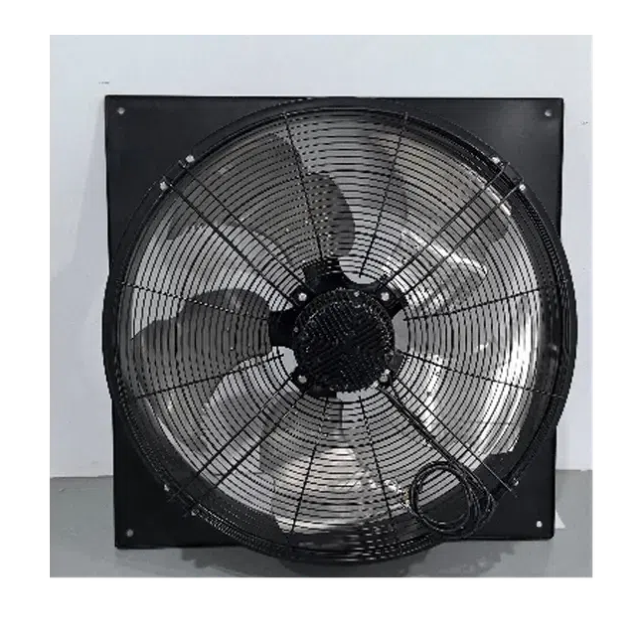
An EC axial fan combines an electronically commutated (EC) permanent magnet synchronous motor (PMSM) with an axial impeller. Unlike conventional AC motors, EC motors integrate a built-in electronic controller that regulates speed dynamically based on demand. This design allows precise airflow control without additional mechanical components such as pulleys or belts, streamlining the fan's operation in commercial HVAC systems. The integration of the motor and control electronics also reduces wiring complexity and enables more compact designs suitable for retrofitting existing units.
Traditional AC fans usually run at a fixed speed and require mechanical interventions like variable pitch belts or gear reducers to adapt airflow. In contrast, EC axial fans adjust their speed automatically via electronic controls, achieving higher efficiency across partial-load conditions. The onboard electronics enable features such as soft-start, modulation based on temperature or pressure sensors, and integration with building management systems (BMS). These capabilities not only save energy but also minimize wear and tear on moving parts. Additionally, EC fans can quickly respond to changing ventilation requirements, making them ideal for buildings with highly variable occupancy or dynamic indoor air quality demands.
EC axial fans are versatile in size, typically ranging from small units for compact AHUs to large models for extensive commercial installations. They are commonly placed in supply and return air sections, sometimes within plenum chambers or directly mounted to ducting. The compact footprint and lightweight construction make them suitable for retrofitting existing AHUs without major structural modifications. Furthermore, their flexible installation options allow for improved airflow distribution and easier maintenance access, providing an ideal upgrade path for facility managers aiming to improve performance without complete system replacement.
Retrofitting AHUs with EC axial fans can substantially reduce energy consumption, primarily through variable speed operation. By matching fan output to actual ventilation demand, energy is not wasted moving excess air. The electronic control enables continuous adjustment to airflow requirements, particularly effective in buildings with fluctuating occupancy levels or varying climate conditions. Additionally, reduced mechanical friction from eliminating belts or pulleys enhances overall efficiency and lowers electricity usage. These energy savings also contribute to a more sustainable building operation and help meet green building certification requirements.
Fan noise is a common concern in commercial HVAC systems, especially in office buildings, hotels, or healthcare facilities. EC axial fans operate more quietly than conventional AC fans due to smoother motor control and optimized impeller design. Less vibration and consistent airflow contribute to improved indoor comfort, creating a stable environment for occupants. Reduced noise levels also allow for quieter workspaces and better acoustic performance in sensitive areas like conference rooms or patient care zones, aligning with occupant comfort goals.
Maintenance requirements for EC axial fans are typically lower than for traditional AC fans. Fewer mechanical components mean fewer points of failure, and the precision of electronic controls reduces stress on bearings and impellers. These fans also have longer mean time between failures (MTBF), resulting in extended service intervals and reduced downtime. For facility managers, this translates into predictable maintenance schedules and a lower total cost of ownership over the fan’s lifecycle. EC axial fans also facilitate simpler diagnostic procedures through built-in monitoring features, enabling proactive maintenance planning.
The first step is understanding your existing AHU’s duty cycle. Assess hours of operation per day, airflow demand patterns, and seasonal variations. AHUs with fluctuating load profiles benefit most from EC axial fan retrofits, as energy savings are maximized when airflow can be dynamically adjusted rather than running at full speed constantly. Additional analysis of temperature and humidity control performance can reveal areas where precise fan modulation could improve comfort and reduce HVAC system stress.
Physical compatibility is critical. Measure available shaft or mounting space, duct connections, and overall fan dimensions. EC axial fans come in various sizes, but ensuring proper fit is necessary to avoid costly modifications. Lightweight construction and flexible mounting options often simplify the retrofit process, but early verification avoids installation delays. Consider also the accessibility for future maintenance and the potential need for additional supports or vibration isolation.
Assess the electrical supply, voltage rating, and available circuits for the new fan. EC axial fans require proper connections for onboard electronics and may need signal interfaces for integration with BMS or other control systems. Confirming compatibility ahead of installation ensures seamless communication between the fan and building automation infrastructure. Integration capabilities with existing sensors, pressure switches, or thermostats should also be reviewed to fully leverage energy-saving features.
Proper mechanical installation is essential for optimal performance. Check fan alignment, ensure secure mounting, and inspect vibration isolation components. Even minor misalignment can generate noise or reduce efficiency. Many EC axial fans include vibration-damping mounts that simplify this process. Confirming correct orientation and ensuring sufficient clearance from duct walls helps maintain uniform airflow and prevent turbulence-related noise.
Ensure correct wiring for power supply and signal lines. Utilize recommended fuses or circuit protection, and select the appropriate speed control mode—whether soft-start, fixed setpoint, or dynamic modulation based on sensor input. Following manufacturer instructions guarantees safe and reliable operation. In addition, verify grounding and surge protection to safeguard sensitive electronic components from power fluctuations.
For modern commercial facilities, integration with a building management system is often necessary. Verify that the fan’s onboard controller can communicate with existing BMS protocols, and conduct functional testing to confirm responsiveness. This step ensures airflow adjustments are synchronized with environmental conditions and operational schedules. Regular monitoring during the initial weeks post-installation helps identify any fine-tuning requirements.
After installation, monitor key performance indicators to evaluate success. Track kWh reduction, changes in maintenance frequency, and MTBF improvements. Observing these metrics provides actionable insights into operational efficiency and supports future retrofit decisions across other AHUs in the facility. In addition, continuous performance tracking can inform decisions on system upgrades or adjustments to ventilation schedules.
Although financial figures are not discussed here, operators can construct a simple payback narrative based on energy efficiency, reduced downtime, and lower maintenance intensity. EC axial fans deliver quantifiable operational improvements that often justify retrofits in energy-conscious commercial environments. Sustainability reporting can also be enhanced, showcasing responsible energy management and support for environmental initiatives.
EC axial fans represent a transformative upgrade for commercial AHUs, offering energy efficiency, noise reduction, and extended service life. Suzhou Dowell Ventilation Technology Co., Ltd has developed a comprehensive range of EC axial fans suitable for retrofit projects, enabling facility managers and HVAC engineers to modernize systems with confidence. For detailed specifications, installation guidance, or sample requests, contact us today to explore how EC axial fans can enhance your building’s performance, comfort, and sustainability.


