


Views: 0 Author: Site Editor Publish Time: 2025-09-02 Origin: Site


Data center operators face the dual challenge of maintaining precise thermal conditions while controlling rising energy costs. Fans alone can account for a substantial portion of a facility’s power usage effectiveness (PUE), and conventional AC fans often struggle to adapt to fluctuating IT loads. Suzhou Dowell Ventilation Technology Co., Ltd provides high-performance EC Axial Fans designed to stabilize airflow, reduce fan power consumption, and support reliable cooling across server racks and room-level systems. In this article, we explain how EC axial fans deliver these benefits and outline practical considerations for integration, selection, and operational verification, helping operators make informed decisions that improve both energy efficiency and system reliability.
Modern data centers rarely operate at constant load. Server clusters experience dynamic workloads, causing uneven heat generation across racks. Fixed-speed fans cannot adapt to these fluctuations, often delivering excess airflow to lightly loaded areas and insufficient airflow to hotspots. This mismatch results in overcooling, wasted energy, or localized overheating, challenging operators to maintain consistent inlet temperatures and protect sensitive equipment. Over time, these inefficiencies can increase fan wear, accelerate maintenance needs, and compromise long-term reliability.
As overall data center efficiency improves, fan power becomes an increasingly significant part of the facility’s total energy use. Traditional AC fans running at full speed to accommodate peak demand consume unnecessary electricity during periods of partial load. This contributes directly to higher PUE and operational costs, creating pressure for energy-efficient fan solutions that can adjust dynamically without compromising cooling performance. For operators seeking sustainable and cost-conscious solutions, reducing fan power through technology upgrades is increasingly important.
EC axial fans incorporate electronically commutated motors with integrated control electronics, allowing continuous speed adjustment. This enables airflow to match real-time heat loads precisely, ensuring racks receive sufficient cooling while minimizing energy waste. The fan’s responsiveness to demand changes helps maintain stable inlet temperatures and prevents sudden temperature spikes that could compromise server reliability. Beyond simple speed adjustment, EC fans can respond to multiple sensor inputs simultaneously, including airflow, temperature, and pressure, providing more granular control than conventional systems.
One of the key advantages of EC fans is their ability to reduce power consumption at partial loads. Conceptually, fan energy follows the cubic relationship of airflow (affinity laws): halving airflow can reduce power usage to roughly one-eighth of full-load consumption. EC axial fans take full advantage of this principle by modulating speed dynamically, which is particularly effective in data centers with variable utilization or redundant cooling zones. This energy-efficient operation contributes not only to lower operational costs but also to reduced heat generation within fan assemblies, extending the life of mechanical components.
EC axial fans operate more quietly than conventional AC fans, thanks to smoother motor control and optimized impeller design. Reduced noise improves on-site comfort for IT staff performing maintenance or monitoring activities, and it also facilitates better detection of unusual sounds or alerts that could indicate system issues. Quiet operation complements operational efficiency without compromising performance. Additionally, reduced acoustic output can simplify compliance with internal noise standards, particularly in mixed-use facilities or offices adjacent to data halls.
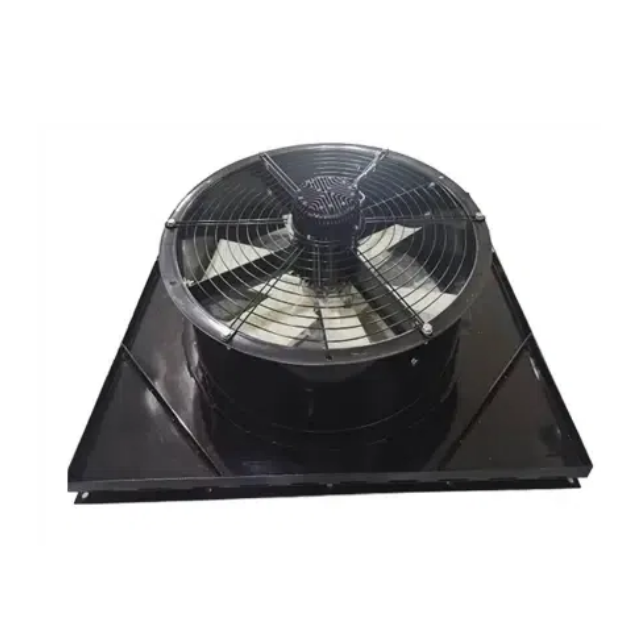
EC axial fans offer multiple interface options for seamless integration with rack-level controls and building management systems. PWM signals, analog voltage control, or direct BMS commands allow operators to fine-tune fan speed according to temperature, pressure, or workload signals. This flexibility ensures compatibility with existing monitoring systems and simplifies retrofits in both new and legacy installations. Integration with BMS also enables coordinated control across multiple fans, optimizing airflow distribution in zones with varying heat loads.
Modern EC fans can provide telemetry such as fan speed, motor current, vibration data, and operational hours. Monitoring these parameters allows facility engineers to predict maintenance needs before failures occur. By specifying required telemetry when selecting fans, operators can set up proactive maintenance schedules, minimizing unplanned downtime and extending the service life of cooling assets. Telemetry can also help identify anomalies early, such as blocked filters or bearing wear, which may impact airflow or create unexpected hotspots.
Selecting the correct fan requires balancing airflow (measured in CFM) and static pressure. Reading fan curves helps determine whether a fan can deliver adequate airflow against resistance from filters, ducts, or server enclosures. EC axial fans often provide multiple performance options to suit different rack densities, cooling layouts, and room designs. It is recommended to model airflow distribution across racks to ensure uniform cooling, avoiding areas with excessive pressure drop that may compromise performance.
Confirm voltage compatibility and verify support for redundant configurations if high availability is required. Hot-swap capability and easy access for maintenance are essential in data centers where operational continuity is critical. EC axial fans’ modular design facilitates safe replacement and service without major system interruption. Evaluating the electrical infrastructure before installation ensures safe integration with existing power distribution and minimizes installation downtime.
Evaluate environmental factors such as ambient temperature, humidity, and dust levels in the data center. EC axial fans are compatible with a range of environmental conditions, but proper filtration and environmental monitoring enhance reliability. Facility engineers should also consider future expansion: selecting fans with scalable performance allows the cooling system to accommodate additional server racks without complete redesign.
After installing EC axial fans, track key performance indicators to evaluate improvements. Metrics such as inlet temperature delta across racks, fan power consumption, and alarm activity provide insight into cooling stability and energy efficiency. Monitoring these KPIs helps validate expected benefits and informs further optimization of airflow distribution. Continuous logging supports data-driven decision-making for future upgrades.
A concise commissioning plan ensures reliable performance. Verify proper fan orientation, electrical connections, speed response to control signals, and integration with BMS. Conduct airflow measurements and temperature logging to confirm that thermal conditions remain within target ranges. Address any discrepancies promptly to avoid long-term performance issues. Documenting commissioning steps also facilitates troubleshooting and supports compliance audits or quality assurance reviews.
EC axial fans offer data centers a strategic advantage by reducing fan power, improving thermal stability, and enabling smarter operational control. Suzhou Dowell Ventilation Technology Co., Ltd provides a range of EC axial fans engineered for reliable integration with server racks and cooling arrays, helping operators enhance efficiency, maintain precise inlet temperatures, and prepare for future capacity growth. For detailed specifications, fan samples, or a free compatibility check, contact us today to explore how EC axial fans can optimize your data center cooling performance and energy efficiency.


