


Views: 0 Author: Site Editor Publish Time: 2025-11-19 Origin: Site


Controlling an Electronically Commutated (EC) motor is straightforward and efficient, thanks to its advanced integrated electronics. Unlike traditional motors, EC motors utilize electronic signals to manage speed and performance, enabling precise adjustments based on system demands. This article explores various methods for controlling EC motor speed, including manual options like control switches and potentiometers, as well as automated solutions using intelligent sensors and HVAC controllers. By understanding these control mechanisms, users can optimize energy efficiency and enhance the overall performance of their applications.
EC motors come mainly in two rotor designs: internal and external. The internal rotor design places the rotor inside the stator. The stator remains fixed, and the rotor spins within it, driving the output shaft, usually connected to a fan impeller. This traditional design is common in many motor types.
The external rotor design reverses this setup. Here, the rotor rotates outside the stator, often forming a ring around it. This eliminates the need for a separate output shaft because the fan impeller can be mounted directly on the rotor’s outer surface. This design reduces the motor's overall size and footprint, making it ideal for compact applications where space is limited.
EC motors blend features of AC and DC motors but operate differently:
● AC Motors: Use alternating current in stator windings to create a rotating magnetic field. The rotor is usually a squirrel-cage type, induced by stator currents. AC motors have fixed speeds tied to line frequency, limiting speed control unless combined with bulky, expensive variable frequency drives (VFDs).
● DC Motors: Use permanent magnets for the stator field and windings on the rotor, with mechanical brushes and commutators to switch current direction. They offer easier speed control but suffer from wear and maintenance issues due to brushes.
● EC Motors: Are brushless DC motors with permanent magnets on the rotor, but commutation happens electronically via integrated circuits. They run on AC power converted internally to DC. This offers high efficiency, low maintenance, and precise speed control without external VFDs.
Integrated electronics are the heart of EC motors. They perform several critical functions:
● Rectification: Convert incoming AC power to DC to run the motor.
● Commutation Control: Electronically switch current in stator windings based on rotor position, eliminating brushes.
● Speed Regulation: Adjust motor speed smoothly based on control signals (analog or digital), maintaining high efficiency even at partial speeds.
● Sensor Integration: Use Hall effect sensors to detect rotor position, enabling precise timing for current switching.
This embedded control system allows EC motors to operate efficiently across a broad speed range, reduce noise, and provide easy integration with building automation systems or HVAC controllers.
When selecting EC motors, prioritize models with advanced integrated electronics for better speed control, energy savings, and reduced maintenance costs.
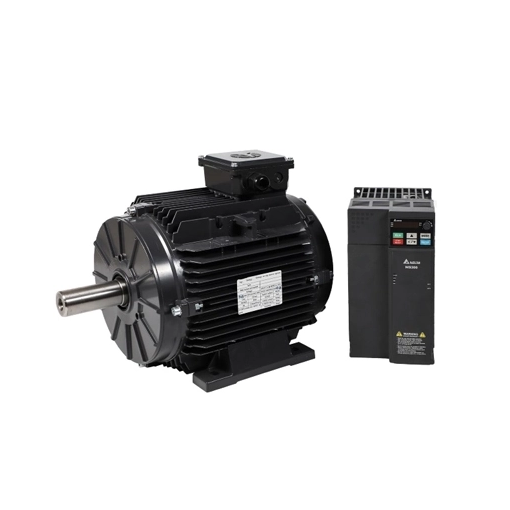
Electronically Commutated (EC) motors rely on electronic commutation instead of mechanical brushes. Inside, the motor has permanent magnets on the rotor and coils in the stator. The motor's integrated electronics control the flow of current through these coils. They switch the current direction precisely in sync with the rotor’s position, creating a rotating magnetic field. This process is called commutation.
Unlike brushed DC motors, EC motors do not have physical brushes or a commutator ring. Instead, the onboard controller manages the timing electronically. This eliminates wear and tear, reduces noise, and improves reliability. The commutation ensures the rotor magnets are always attracted or repelled by the stator’s magnetic poles, causing smooth rotation.
The heart of EC motor operation is the interaction between magnetic fields. The stator windings, energized by the motor controller, generate a magnetic field that rotates around the stator. The rotor contains permanent magnets that follow this rotating field.
As the controller switches current through different stator coils, it creates magnetic poles that move step-by-step around the stator. The rotor magnets align with these poles, producing torque and causing the rotor to spin. The continuous switching of current keeps the rotor turning at the desired speed.
This magnetic interaction is highly efficient because the motor always uses the minimum current needed to maintain rotation. That’s why EC motors maintain high efficiency even at partial speeds.
Hall effect sensors play a crucial role in EC motor operation. These sensors detect the exact position of the rotor magnets. They send signals to the motor’s electronic controller indicating where the rotor currently is.
This position feedback allows the controller to time the current switching precisely. Without accurate rotor position information, the motor would not start or run efficiently. The Hall sensors ensure the motor’s magnetic fields are synchronized with the rotor movement.
Thanks to Hall effect sensors, EC motors can adjust their speed smoothly and respond quickly to control signals. This makes them ideal for applications requiring variable speed control and high efficiency.
Use EC motors with integrated Hall effect sensors to achieve precise, efficient speed control and reduce maintenance costs in your applications.
Controlling the speed of an EC motor is straightforward thanks to its integrated electronics. These motors need a control signal to set the desired speed. This signal can be either analog, usually 0-10 volts, or digital, such as Modbus RTU communication. The motor’s internal controller adjusts the power to the stator windings based on this input, enabling smooth speed changes and efficient operation.
For manual control, you have a couple of common choices:
● Control Switch: This device sends a stepped 0-10 V signal to the motor. It allows selecting from a limited number of preset speeds. This option is simple and effective for applications where only a few speed settings are needed.
● Potentiometer: This device provides a continuously variable 0-10 V signal, allowing stepless speed adjustment. Potentiometers come with or without an OFF position and can be wired to increase or decrease voltage as needed. This gives users precise control over the motor speed.
Both methods are easy to install and use, making them popular for applications where manual speed adjustments are sufficient.
For automatic speed adjustments based on environmental conditions or system demands, EC motors can be paired with intelligent sensors and controllers:
● HVAC Sensors: Sensors measuring temperature, humidity, CO₂ levels, or air quality can generate analog or digital signals that adjust the motor speed. For example, if CO₂ levels rise, the motor speed can increase to improve ventilation. These sensors use smart algorithms to maintain parameters within set ranges, optimizing comfort and efficiency.
● HVAC Controllers: These devices manage multiple sensors and motors in a system, providing centralized control. They can adjust speeds based on complex inputs and schedules, often through user-friendly interfaces. Controllers may be local or internet-accessible, enabling remote monitoring and adjustments.
This demand-based control maximizes energy savings by running the motor only as fast as needed, reducing wear and extending equipment life.
Integrating EC motors with HVAC sensors and controllers offers several benefits:
● Energy Efficiency: Motors run at lower speeds when full power isn’t necessary, cutting energy use.
● Comfort: Systems respond dynamically to changing conditions, maintaining stable environments.
● System Integration: Controllers can coordinate multiple motors and sensors, optimizing overall performance.
● Ease of Use: Many controllers come with intuitive interfaces and can be programmed for specific applications.
This level of control is especially valuable in ventilation systems, air handling units, and cooling applications where conditions vary frequently.
For optimal EC motor speed control, combine manual input devices like potentiometers with intelligent HVAC sensors and controllers to balance user control and automated efficiency.
EC motors shine in energy efficiency. They often operate above 90% efficiency, which means they use less electricity than traditional motors. For example, at 20% speed, EC motors can save up to 70% energy compared to AC motors. Even at full speed, they still save around 10%. This efficiency reduces electricity bills and cuts operating costs over time.
The integrated electronics inside EC motors allow them to adjust power according to demand. This means the motor only uses the energy it needs, avoiding waste. Lower energy use also means less heat generated, which reduces stress on motor components and extends motor life.
Though EC motors may have a higher upfront price due to permanent magnets and electronics, the energy savings usually offset this cost quickly. Many utilities offer rebates for energy-efficient equipment, further improving the return on investment.
EC motors are easy to control thanks to their built-in electronics. They accept simple control signals, like a 0-10 V input or digital commands, to adjust speed smoothly. This eliminates the need for bulky, expensive variable frequency drives (VFDs).
Their broad speed range allows running at very low speeds (down to about 20% of full speed) while maintaining high efficiency. This flexibility suits many applications, from ventilation to cooling systems.
Additionally, EC motors can exceed standard speeds, enabling smaller, lighter fans to deliver more airflow. This versatility means one EC motor can replace multiple traditional motors, simplifying inventory and installation.
EC motors require less maintenance than traditional motors. They have no brushes or mechanical commutators, which are common wear points in DC motors. The absence of these parts means less noise, less wear, and longer service life.
Lower operating temperatures from high efficiency reduce thermal stress on windings and bearings. This further extends motor life and reduces downtime.
If a replacement is needed, EC motors are often designed for easy swap-out, minimizing labor and system disruption.
Choose EC motors with advanced integrated electronics to enjoy superior energy savings, simple speed control, and longer motor life in your applications.
EC motors are widely used in ventilation systems due to their energy efficiency and precise speed control. They help maintain optimal airflow in buildings by adjusting fan speeds according to demand. For example, in commercial buildings, EC motors can vary ventilation rates based on occupancy or indoor air quality, reducing energy waste. Their compact size and low noise levels make them ideal for quiet environments like offices or hospitals.
In cooling systems, EC motors improve performance by reducing energy consumption and heat generation. They drive fans in refrigeration units, chillers, and air conditioners, maintaining consistent airflow while consuming less power. Because EC motors produce less heat, they reduce the cooling load on systems, enhancing overall efficiency. Their ability to operate at variable speeds also allows cooling systems to adapt to changing conditions, optimizing comfort and lowering operational costs.
Air handling units (AHUs) benefit greatly from EC motors. These motors enable AHUs to deliver precise airflow control, improving temperature and humidity regulation. Continuous operation at partial speeds ensures even air distribution, enhancing occupant comfort and indoor air quality. EC motors’ longevity and low maintenance reduce downtime and service costs in AHUs, which often run for extended periods. Their integrated electronics allow easy integration into building management systems for centralized control and monitoring.
When selecting EC motors for ventilation, cooling, or air handling units, prioritize models that support seamless integration with HVAC sensors and controllers to maximize energy savings and system responsiveness.
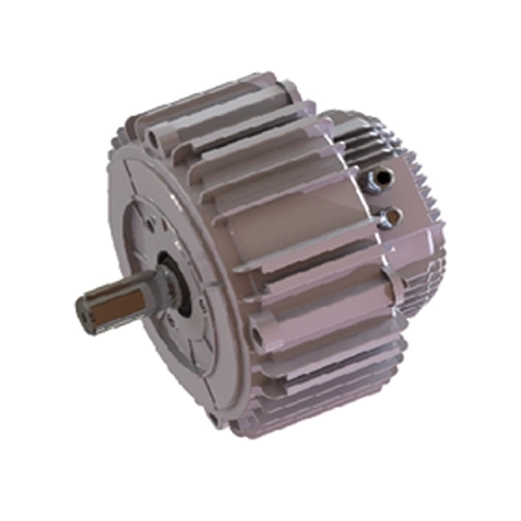
Selecting the right EC motor depends on several key factors to ensure optimal performance and cost-effectiveness:
● Application Requirements: Understand the specific needs of your system, such as airflow, pressure, and speed range. Different applications like ventilation, cooling, or air handling units may require motors with particular torque or speed characteristics.
● Size and Mounting: Consider the available space and mounting type. External rotor designs offer compactness and direct fan attachment, saving space and simplifying installation.
● Control Compatibility: Ensure the motor supports your preferred control signals, whether 0-10 V analog, PWM, or digital protocols like Modbus RTU. Compatibility with existing HVAC sensors and controllers is crucial for seamless integration.
● Efficiency Ratings: Look for motors with high efficiency, especially at partial loads. Efficiency above 90% is common in EC motors, but some models perform better at low speeds, which can significantly reduce energy costs.
● Noise Levels: Depending on the environment, motor noise may be a concern. EC motors generally operate quietly, but verify noise specifications if the motor will be used in noise-sensitive areas.
● Environmental Conditions: Check the motor’s IP rating and suitability for temperature, humidity, or dust exposure. Motors designed for harsh environments may have additional sealing or protective features.
While EC motors tend to have a higher upfront cost than traditional AC motors, their benefits often justify the investment:
● Energy Savings: EC motors can reduce energy consumption by up to 70% at partial speeds compared to AC motors. This translates to lower electricity bills over the motor’s lifetime.
● Reduced Maintenance: The brushless design eliminates wear parts like brushes and commutators, lowering maintenance costs and downtime.
● Longer Service Life: Lower operating temperatures and less mechanical stress extend motor life, delaying replacement costs.
● Rebates and Incentives: Many utilities offer rebates for energy-efficient equipment, improving the payback period.
It’s important to calculate the total cost of ownership, including purchase price, energy consumption, maintenance, and downtime. Consulting with an energy specialist or using software tools can help estimate savings and payback time.
EC motor technology continues to evolve, promising even greater benefits:
● Improved Electronics: Advances in integrated electronics will enable smarter control, better diagnostics, and enhanced communication with building management systems.
● Higher Efficiency Materials: Use of new magnetic materials and improved winding techniques will push efficiency levels higher, especially at low speeds.
● Compact and Lightweight Designs: Ongoing design improvements will reduce motor size and weight, simplifying installation and expanding application possibilities.
● IoT Integration: EC motors will increasingly feature connectivity options for remote monitoring, predictive maintenance, and adaptive control, enhancing system reliability and energy management.
● Broader Voltage Compatibility: Future motors may support a wider range of voltages and power supplies, making them suitable for global markets and diverse applications.
Staying informed about these trends helps businesses plan upgrades and investments that maximize long-term value.
When choosing an EC motor, prioritize models that offer high efficiency at your operating speeds and seamless integration with your existing control systems to maximize energy savings and simplify installation.
EC motors offer significant advantages, including energy efficiency, ease of control, and reduced maintenance. They excel in applications like ventilation and cooling due to their precise speed control and compact design. Leading EC Fan & centrifugal fan Manufacturer - Dowell provides EC motors that enhance system performance and energy savings, making them valuable for diverse industries. As technology advances, EC motors promise even greater benefits, ensuring their continued relevance in energy-efficient solutions.
A: An EC motor, or Electronically Commutated motor, is a brushless DC motor with integrated electronics that convert AC power to DC, offering high efficiency and precise speed control.
A: EC motors are more efficient than AC motors, offering precise speed control without bulky variable frequency drives, making them ideal for energy-saving applications.
A: EC motors are more efficient due to their brushless design and integrated electronics, which minimize energy waste and maintain high efficiency even at partial speeds.
A: EC motor speed can be controlled with analog signals (0-10 V) or digital communication (Modbus RTU), allowing for smooth and efficient speed adjustments.
A: EC motors in ventilation systems provide energy efficiency, precise airflow control, and reduced noise, enhancing comfort and lowering operational costs.


