


Views: 0 Author: Site Editor Publish Time: 2026-08-18 Origin: Site


Quiet ventilation is not simply about choosing a quieter motor. Poor airflow design can make even an efficient fan noisy. An ec centrifugal fan combines controlled motor speed with strong pressure performance. In this article, we explain why it works well for low-noise ventilation.
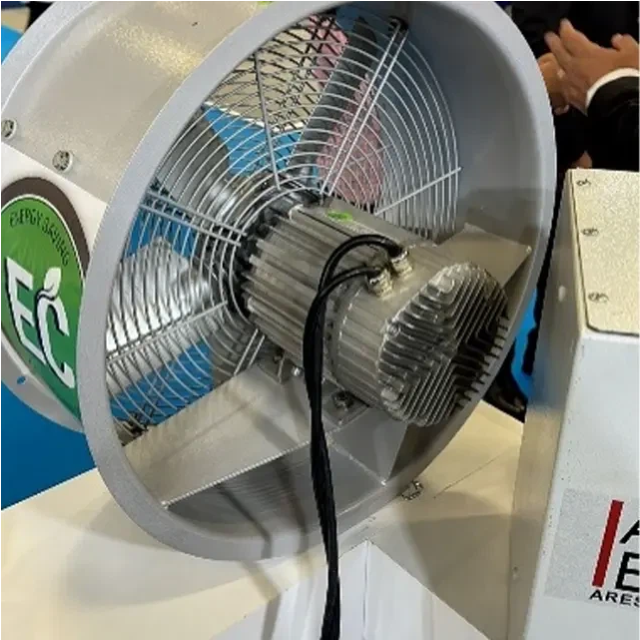
● An EC Centrifugal Fan can adjust speed according to real airflow demand. Lower unnecessary speed often means less airflow noise and lower energy use.
● Electronic commutation provides precise motor control. It supports smooth operation as ventilation loads rise or fall.
● Centrifugal airflow works well in ducted systems. It can overcome resistance from filters, ducts, dampers, and HVAC components.
● Impeller geometry strongly affects acoustic performance. Well-designed blades can reduce turbulence while maintaining useful pressure.
● Balanced rotating parts help limit vibration. This reduces noise transferred into housings, cabinets, and duct structures.
● Smart controls let the fan respond to temperature, pressure, humidity, or system commands. This prevents excessive airflow during low-demand periods.
● Fan selection still matters. Size, speed, static pressure, mounting, and duct design can turn a quiet fan into a noisy system.
Low-noise ventilation depends on controlling several noise sources together. Motor sound, turbulent airflow, vibration, excessive speed, and system resistance can all increase total noise.
EC centrifugal technology helps address these factors within one controllable system. Its main advantage comes from combining efficient airflow control, stable rotation, and useful pressure capability.
A ventilation system rarely needs maximum airflow every hour. Offices, equipment rooms, commercial buildings, and HVAC systems experience changing loads throughout the day.
An EC fan can reduce motor speed when demand falls. It does not need to deliver full airflow during low-load periods.
This matters because excessive rotational speed increases air velocity and turbulence. It can also make mechanical sound more noticeable.
By supplying only the airflow needed, the fan can support quieter operation during normal part-load conditions.
An EC motor uses electronic control to manage motor operation. This allows precise speed adjustment across a wide operating range.
Instead of depending on constant-speed operation, the fan can respond smoothly to changing ventilation requirements.
This approach also reduces the need for some mechanical speed-control components. Fewer moving control parts can simplify the overall ventilation system.
Motor noise is only part of the acoustic problem. Air itself creates noise when blade geometry produces strong turbulence or unstable flow.
A carefully designed centrifugal impeller guides air through the fan more effectively. Better airflow paths help limit unnecessary disturbance around the blades.
This design principle becomes important in low-noise ventilation. Aerodynamic improvements can help maintain useful airflow without relying only on higher rotational speed.
Small imbalances become more noticeable at higher fan speeds. They can generate vibration inside the fan assembly.
That vibration may then travel into a cabinet, frame, housing, or duct system. Nearby panels can amplify the sound further.
Balanced rotating parts help reduce this mechanical source of noise. Stable bearings and secure mounting also support smoother operation.
Quiet ventilation becomes harder when air must pass through long ducts, filters, dampers, coils, or other restrictions.
A poorly matched fan may need to run faster to maintain the required airflow. Higher speed can increase both aerodynamic and mechanical noise.
Centrifugal fans are useful because they can generate the static pressure needed for ducted ventilation. Correct selection helps maintain airflow without forcing the fan into an unnecessarily demanding operating range.
Modern ventilation systems can adjust fan speed using control signals and sensors.
The controller may respond to temperature, pressure, humidity, occupancy, or equipment conditions. When demand decreases, fan speed can also decrease.
This demand-based approach improves acoustic comfort while reducing unnecessary power consumption.
Tip: Specify the lowest practical fan speed that still meets required airflow and static pressure.
Noise factor | How EC centrifugal design helps | What to verify |
Excessive speed | Variable-speed operation | Required duty point |
Motor sound | Electronic commutation | Control range |
Air turbulence | Engineered impeller geometry | Airflow path |
Vibration | Balanced rotating assembly | Mounting method |
Duct resistance | Useful static pressure | System pressure loss |
Changing demand | Intelligent control | Signal compatibility |
The acoustic advantage does not come from EC technology alone. It comes from how motor control, impeller design, and system operation work together.
A traditional fixed-speed fan may provide more airflow than the system currently needs. Dampers can restrict that airflow, but the motor may continue running at high speed.
An EC Centrifugal Fan can reduce speed directly. This can lower unnecessary airflow velocity and motor output during lighter loads.
It also gives system designers more control over changing operating conditions.
Many ventilation systems spend long periods below maximum capacity.
An office may require less airflow at night. HVAC cooling demand may fall during mild weather. Equipment cabinets may produce less heat during low processing loads.
Variable-speed control becomes valuable in these situations. The fan can slow down instead of maintaining maximum output.
For HVAC projects requiring adjustable airflow and pressure, a dedicated EC centrifugal fan for HVAC can provide a more suitable operating approach than relying on constant-speed ventilation.
An EC fan can still produce excessive noise when it is poorly selected.
A small fan operating near maximum speed may become louder than a larger fan running comfortably at a lower speed.
Impeller design, static pressure, RPM, duct geometry, and installation also affect acoustic performance.
Note: Compare complete operating conditions instead of relying on one isolated decibel value.
The right centrifugal fan design depends on pressure requirements, installation space, airflow demand, and acoustic targets.
These factors should be reviewed together rather than separately.
Different blade geometries create different airflow and pressure characteristics.
Forward-curved impellers can suit compact applications requiring useful pressure. Backward-curved designs are often chosen when efficient airflow and stable pressure performance are important.
Neither design is automatically quieter in every system. The better choice depends on the intended operating point.
Fan diameter influences how quickly the impeller must rotate to deliver the required airflow.
A properly sized fan may achieve the same ventilation result at a lower rotational speed. This can help reduce aerodynamic noise.
Buyers should therefore review the complete fan curve. The ideal selection should meet airflow and static pressure needs within a stable operating range.
Bearings influence rotational stability and long-term vibration.
Smooth bearings, a balanced impeller, and a rigid structure can help prevent mechanical noise from developing over time.
Regular maintenance also matters. Dust buildup, worn bearings, or loose components can increase noise even when the original fan design is quiet.
A quiet fan can still transfer vibration into nearby metalwork.
Thin cabinets or poorly supported panels may act like sound amplifiers. Rigid structural connections can also carry vibration into ductwork.
Mounting design therefore deserves attention during equipment development.
Tip: Review fan mounting, enclosure stiffness, and vibration transfer before finalizing the mechanical layout.
Variable-speed control turns low-noise potential into practical system performance.
It lets engineers control airflow according to demand rather than switching full power on and off.
A control signal can increase or decrease fan speed according to system requirements.
The fan may accelerate when temperature rises. It can slow again after the load drops.
This prevents excessive airflow and helps reduce avoidable acoustic output.
An EC fan can operate alongside temperature or pressure sensors.
More advanced systems may use building management logic or equipment controllers. The fan can then respond automatically to changing conditions.
This approach is useful in HVAC equipment, clean environments, electronics cooling, and other controlled ventilation systems.
Sudden acceleration can create a noticeable acoustic change.
Soft-start control allows the fan to increase speed more gradually. This can improve comfort where ventilation equipment operates near occupied areas.
Controlled start-up can also reduce mechanical shock during repeated operating cycles.
Note: A good control strategy should consider acoustic comfort and airflow stability at the same time.
Low-noise performance becomes especially important where reliable airflow must operate near people or sensitive equipment.
Offices, hotels, shops, and other occupied buildings often require continuous ventilation.
Noise from fans can affect comfort when equipment operates near meeting rooms, bedrooms, workspaces, or public areas.
Variable-speed centrifugal fans help by adjusting airflow as demand changes. Their pressure capability also supports air handlers and ducted HVAC systems.
Laboratories, clean areas, and precision manufacturing systems often require controlled airflow through filters and equipment.
Stable pressure and adjustable airflow are important in these applications.
A controllable fan can maintain ventilation requirements while avoiding excessive speed during lower-demand periods.
Electronic cabinets generate changing heat loads.
Cooling demand may rise during heavy processing and fall during lighter operation.
An EC Centrifugal Fan can adjust airflow to these changes. This helps reduce unnecessary noise and power consumption when full cooling capacity is not required.
Temporary ventilation may involve different duct lengths, pressure losses, and airflow requirements.
Construction areas, equipment servicing, warehouses, and temporary cooling are common examples.
Variable-speed centrifugal airflow gives operators more flexibility when operating conditions change.
A low-noise specification should begin with system requirements.
Starting from a catalog sound number can lead to poor fan selection.
Calculate the required airflow before choosing the fan.
Then estimate pressure losses from filters, ducts, coils, dampers, grilles, and fittings.
The selected fan must meet both requirements together. Oversized or undersized equipment can create inefficient operating conditions.
A maximum-speed noise figure may not represent normal use.
One fan may run quietly at moderate speed but become much louder near its operating limit.
Check fan speed, airflow, static pressure, test distance, and installation conditions when comparing acoustic data.
Consider installation space alongside pressure requirements.
A compact fan may fit easily, but it should still provide enough operating margin for quiet performance.
Impeller geometry should also suit the application. Ducted HVAC, electronics cooling, and portable ventilation may require different airflow characteristics.
Specify the required control method before final fan selection.
Also define voltage, airflow range, pressure, mounting dimensions, operating environment, and acoustic goals.
Custom requirements are easier to address when they are included during the early design stage.
For quiet ventilation, fan control and system matching matter as much as motor technology. An EC Centrifugal Fan can reduce unnecessary speed, turbulence, and vibration while handling duct resistance efficiently. Dowell provides EC centrifugal solutions for intelligent speed control, compact integration, and customized airflow needs. Its engineering support can also address speed, pressure, dimensions, power, and noise targets. These advantages help create quieter and more efficient ventilation systems.
A: An EC Centrifugal Fan combines centrifugal airflow with electronically controlled motor speed.
A: An EC Centrifugal Fan can reduce unnecessary speed, turbulence, and vibration.
A: Select an EC Centrifugal Fan using airflow, static pressure, speed, and noise requirements.
A: An EC Centrifugal Fan may cost more initially, but efficient control can reduce operating costs.
A: No. Fan size, speed, impeller design, pressure, and installation also affect noise.
A: Check airflow restrictions, excessive speed, loose mounting, imbalance, and duct resistance.


