


Views: 0 Author: Site Editor Publish Time: 2026-09-09 Origin: Site


Original Equipment Manufacturers (OEMs) face exceptionally high stakes when selecting ventilation components. Sourcing the wrong parts directly leads to critical system failures, sudden compliance issues, and severe supply chain bottlenecks. A single faulty component can easily paralyze an entire production run. Procurement teams often struggle to look beyond basic product specifications like airflow or static pressure. Yet, focusing merely on catalog numbers misses the supplier's actual operational maturity and testing rigor.
You need to ensure the vendor possesses robust engineering capabilities to handle real-world deployment challenges. This article provides procurement managers and engineers a rigorous, evidence-based framework. You will learn exactly how to evaluate and shortlist an ideal partner for your upcoming projects. We will explore key vetting strategies to help you secure reliable, long-term manufacturing support and avoid costly post-launch redesigns.
Reliable manufacturers offer value beyond basic airflow and static pressure metrics, focusing on system integration and environmental adaptability.
A credible EC fan factory demonstrates transparent end-to-end quality control, from dynamic balancing to extreme-condition aging tests.
Customization capabilities (e.g., CFD fluid simulation, specific 0-10V/PWM control setups) separate true engineering partners from simple assemblers.
Verification of global compliance (ErP directives, CE, RoHS, IP ratings) is non-negotiable for mitigating OEM regulatory risks.
Buyers often fall into a dangerous commoditization trap. They evaluate suppliers based strictly on catalog specifications. You might look at cubic feet per minute (CFM), static pressure, and decibel (dBA) ratings. Relying only on these numbers poses a massive risk to your final product. A basic datasheet cannot predict field reliability under stress. Two fans might show identical laboratory performance. However, they will behave very differently when deployed in harsh conditions.
Common Mistake: Relying purely on peak CFM numbers without checking the static pressure curve at your system's exact operating point.
We must strongly consider environmental realities. Real-world deployment variables matter significantly more than theoretical lab data. An ideal supplier evaluates how extreme temperature fluctuations affect motor performance. High-humidity environments demand specific conformal coatings on all internal electronics. Corrosive atmospheres or heavy dust quickly destroy unprotected components. You need a partner who builds products specifically for these exact conditions.
A trustworthy EC fan manufacturer understands these practical challenges intimately. They do not just sell an off-the-shelf product. They provide a resilient, long-term ventilation solution. By looking far beyond basic airflow metrics, you protect your entire system from premature failure in the field.
Evaluating a supplier requires looking closely at their engineering workflow. The process must move smoothly from initial requirement gathering to physical prototyping. Reliable manufacturers do not just assemble parts from third-party catalogs. They actively engineer custom solutions. They ask critical questions about your system architecture upfront. This proactive approach prevents costly redesigns later in the development cycle.
Simulation and modeling form the absolute backbone of this engineering process. In-house Computational Fluid Dynamics (CFD) is crucially important. CFD software allows engineers to optimize aerodynamic efficiency virtually. They fix severe airflow bottlenecks before cutting any expensive physical molds. This saves both development time and capital. It also ensures the final product meets your precise performance targets without endless trial and error.
Best Practice: Always request a preliminary CFD simulation report before signing off on final hardware tooling.
Smart control integration separates top-tier suppliers from basic vendors. Modern industrial ventilation demands complex electronic communication. You must evaluate the supplier's ability to customize PCBA logic boards. Can they smoothly adjust Pulse Width Modulation (PWM) control parameters? Do they seamlessly integrate Modbus communication protocols? Sensors must talk directly to your system controllers. A true engineering partner tailors these setups perfectly. They align the motor's internal brain to match your specific operational demands.
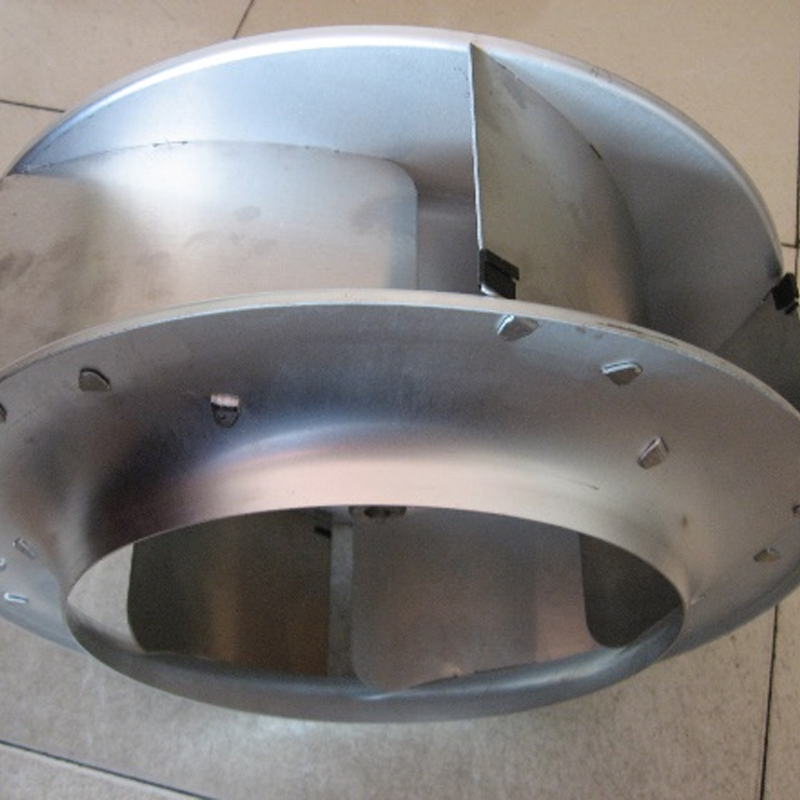
Visibility into the actual manufacturing process is vital for OEMs. You should look for a highly documented design-to-production workflow. A credible EC fan factory shows exactly how they build things. They track everything meticulously from initial design to final dispatch.
We typically observe the following standard sequence in a mature facility:
Precision mold design and physical fabrication.
Metal stamping and plastic injection molding.
Automated motor copper winding.
Printed Circuit Board (PCB) assembly and logic programming.
Final system assembly and performance calibration.
Critical testing equipment proves a factory's true commitment to quality. You must physically or virtually verify their mandatory Quality Assurance (QA) infrastructure. Top-tier facilities house very specific diagnostic tools to guarantee performance.
High-precision dynamic balancing machines ensure completely vibration-free operation.
Anechoic chambers provide highly accurate acoustic measurements and noise profiling.
Wind tunnel testing stations verify true aerodynamic performance against the datasheet.
Burn-in and accelerated aging stations simulate years of continuous harsh use.
Component traceability also matters immensely in global supply chains. The supplier must track every single raw material back to its exact source. They need to monitor bearings, rare-earth magnets, and copper wire batches constantly. This strict traceability guarantees batch-to-batch consistency across years of production. If a rare field issue occurs, traceable components make root cause analysis much faster.
Navigating global regulations requires rigorous validation. You cannot simply trust glossy marketing brochures regarding energy standards. Validating efficiency claims involves checking ErP (Energy-related Products) directives carefully. Europe strictly enforces these rules for industrial motor efficiency. A reliable vendor provides transparent lab data proving their ErP compliance. This ensures your final OEM product remains legally sellable across stringent international markets.
Safety and market certifications are equally important for brand protection. Your chosen facility must produce fans holding verifiable safety marks. Look for valid CE, UL, or RoHS certifications. These documents are strictly non-negotiable for global distribution networks. Counterfeit or expired certificates pose severe legal risks to your company. Always request the official certification numbers. Verify them directly through the issuing agency's online database.
Common Mistake: Assuming a general CE mark covers all specific sub-directives for complex industrial machinery.
Ingress protection (IP) claims also require strict validation. An IP54, IP55, or IP68 rating dictates environmental survivability. Manufacturers must validate these IP rating claims through documented testing protocols. Third-party testing provides the absolute highest confidence level. However, rigorous in-house water and dust testing chambers are also highly acceptable. You should always ask to review the detailed IP test reports. This confirms the motor will actually survive in its intended operating environment.
Top-tier suppliers act as true consultative partners. They help OEMs bridge the common specification gap early. Design engineers often make subtle sizing errors during the initial layout process. They might undersize a fan by miscalculating internal system impedance. Sometimes they ignore unexpected field voltage fluctuations. A proactive partner catches these mistakes immediately. They review your system constraints deeply before recommending a specific model.
Best Practice: Involve the fan manufacturer's engineering team during the initial CAD layout phase, not after the physical enclosure is already locked.
The prototyping feedback loop is highly critical here. Look at the manufacturer's willingness to supply rapid pre-production samples. You desperately need these samples for in-system OEM testing. Lab data only tells half the story. The supplier must show real agility in iterating based on your field data. If the prototype runs too hot inside your machine, they should quickly adjust the stator design.
Transparent limitations build lasting, long-term trust. A trustworthy supplier will actively advise against bad configurations. They will warn you if a specific request compromises motor reliability. For example, running a standard commercial fan in a highly corrosive offshore environment is a terrible idea. Simple assemblers usually say "yes" to every request just to win the purchase order. True partners push back. They prioritize your system's long-term survival over a quick sale.
Evaluating potential manufacturing partners requires a highly structured approach. You must carefully balance production capacity against operational flexibility. Large-scale volume capabilities are important for mature, fast-selling product lines. However, you also need a partner willing to accommodate reasonable Minimum Order Quantities (MOQs). Pilot runs and custom prototypes require lower volumes initially. The best factories handle both production extremes efficiently.
Supply chain resilience dictates your future success. Assess the manufacturer's overall financial health first. Then look closely at their component sourcing stability. Do they single-source critical microchips? That introduces massive risk during shortages. You must also evaluate their historical lead-time accuracy. Consistent on-time delivery matters significantly more than a slightly cheaper unit price.
Post-sales engineering support defines the true vendor relationship. Hardware inevitably faces field challenges eventually. You must evaluate their warranty terms very carefully. Ask about their failure analysis protocols. Do they provide comprehensive 8D reports when things go wrong? Check their typical response times for technical troubleshooting. A delayed response can halt an entire OEM production line.
Supplier Evaluation Matrix
Evaluation Criteria | Basic Vendor | Strategic Partner |
|---|---|---|
Engineering Support | Datasheet provision only | Custom CFD and PCBA design |
Quality Assurance | Basic end-of-line testing | Dynamic balancing and anechoic chambers |
Flexibility | Rigid high MOQs | Scalable pilot runs |
Compliance | Self-certified claims | Verifiable CE, UL, and RoHS certificates |
Your next steps should involve decisive action. Initiate a formal Request for Quotation (RFQ) process. Include your absolute hardest technical challenges in the RFQ document. Request a detailed technical audit of their internal quality systems. Finally, schedule a virtual or physical factory tour. Seeing the production floor firsthand removes all guesswork from your decision.
Evaluating a potential supplier requires looking far past the standard marketing datasheet. You must dive deeply into their internal engineering processes. Factory testing standards and corporate transparency reveal their true manufacturing capabilities. Basic airflow metrics simply do not guarantee long-term system reliability.
A thorough vetting process at the Bill of Materials (BoM) stage is absolutely essential. It directly prevents costly product recalls later. It also eliminates the need for expensive system redesigns post-launch. You protect your brand reputation by choosing a reliable partner early.
Take action today to secure your ventilation supply chain. Contact our dedicated engineering team to discuss your specific project parameters. Download a comprehensive supplier evaluation checklist to standardize your vendor audits. Let us help you design a more resilient, globally compliant, and highly efficient system.
A: A standard custom prototype usually takes between three to six weeks. The timeline begins after completing the initial CFD simulation. Delivery speed heavily depends on specific mold requirements. If your design utilizes existing stator tooling, delivery is much faster. Completely custom injection molds extend this timeframe significantly. Open communication ensures realistic schedules.
A: Standard catalog items require very low Minimum Order Quantities. However, custom units require more initial investment. If your project needs customized PCBAs, specialized harnesses, or unique tooling, the MOQ typically starts between 100 and 500 units. This volume offsets the dedicated engineering hours and specialized setup times required for non-standard runs.
A: Yes. Credible manufacturers always provide comprehensive lab reports tailored to your exact OEM parameters. You will receive specific airflow graphs, thermal stress testing results, and detailed acoustic profiles. If your equipment operates outdoors, they will supply dedicated IP ingress testing data. This proves the unit survives your specific environmental conditions.
A: You must always request official ErP compliance documentation. Ask the supplier for detailed motor efficiency curves across various speed ranges. During the prototyping phase, conduct independent power consumption tests within your actual equipment. Comparing these real-world amp draws against the supplier’s lab data provides the most accurate verification.
