


Views: 0 Author: Site Editor Publish Time: 2026-07-17 Origin: Site


Modern industrial thermal management presents a highly complex engineering challenge. Facilities must constantly balance stringent international energy regulations against the uncompromising demand for high-static-pressure cooling. Striking this delicate balance requires precision equipment capable of pushing massive volumes of air through highly restrictive pathways. Electronically Commutated (EC) technology offers a truly compelling solution to this exact dilemma. While these advanced motors present a noticeably higher initial capital expenditure than traditional AC induction motors, their operational precision and dramatic energy savings demand a fundamental shift in procurement thinking. The long-term efficiency gains and reliability improvements far outweigh the upfront financial sting. Our primary goal is to provide procurement managers and lead engineers with a comprehensive, evidence-based framework. By following this guide, you will learn exactly how to evaluate, shortlist, and integrate the right EC centrifugal fans without over-specifying equipment or risking expensive system incompatibility down the line.
Briefly establish why an industrial cooling project specifically requires centrifugal airflow over standard axial models. Axial fans move high volumes of free air but fail miserably against resistance. Industrial settings typically feature highly restrictive ductwork, dense HEPA filtration banks, or tightly packed electronic server racks. These physical barriers create massive system impedance. Centrifugal impellers excel in these exact environments. They inherently generate the high static pressure required to force air through stubborn physical obstacles.
Discard marketing fluff when evaluating equipment upgrades. We must focus strictly on verifiable engineering benefits. The true EC advantage manifests in several real-world applications. They offer perfect stepless speed control without external hardware. They entirely eliminate the need for bulky, expensive Variable Frequency Drives (VFDs) that complicate electrical panels. Furthermore, their external rotor motor designs integrate the motor directly inside the impeller hub. This creates a significantly smaller installation footprint, freeing up critical mechanical space.
Success looks completely different across internal departments. We must actively align procurement goals with engineering requirements. Define what a successful selection actually looks like before drafting a purchase order. It means hitting strict European ErP compliance metrics for sustainability. It involves achieving a return on investment in under three years through measurable power reductions. Finally, it requires maintaining absolute N+1 redundancy to protect critical infrastructure during unplanned maintenance windows.
Engineers absolutely must plot system impedance against the manufacturer’s published fan curve. Airflow behaves unpredictably when forced through tight mechanical spaces. You cannot simply guess the aerodynamic resistance. A very common and costly error involves selecting a unit based purely on its free-air CFM rating. This lazy approach ignores real-world impedance entirely.
You must determine the exact operating point CFM. Calculate the precise pressure drop across all your filters, cooling coils, and louvered vents. Plotting this impedance curve against the performance curve reveals the true operating duty point. This mathematical validation ensures your chosen unit actually moves the required air volume when operating under heavy load.
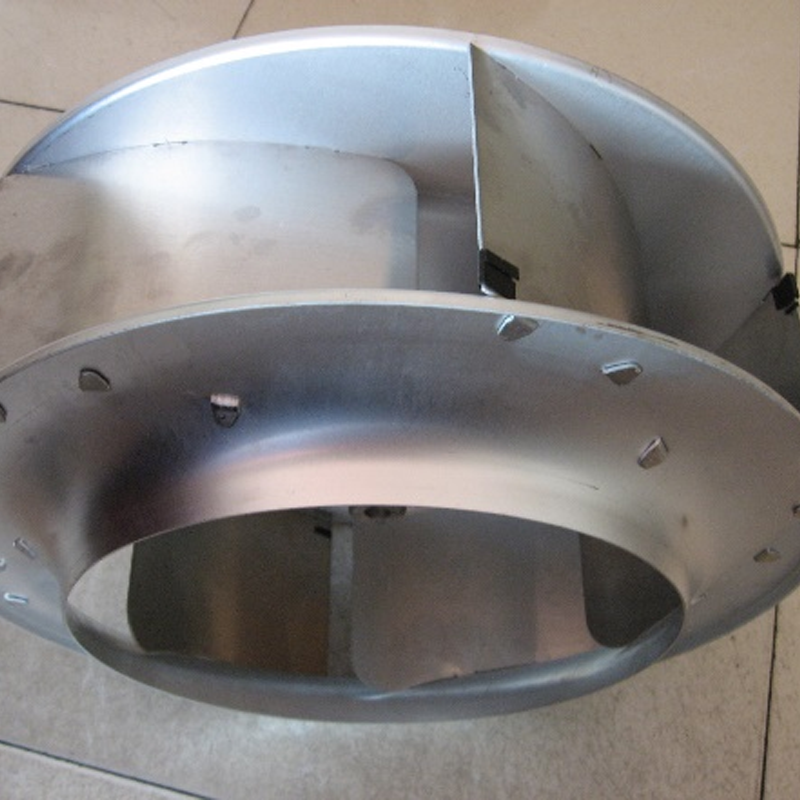
Impeller design choices drastically alter aerodynamic performance profiles. You must select the right blade geometry for your specific application.
Industrial environments routinely punish mechanical equipment. You must rigorously address required Ingress Protection (IP) ratings. A standard cleanroom might only need IP54 protection against light dust. However, a food processing washdown facility requires IP68 ratings for maximum dust and high-pressure moisture resistance.
Highlight the critical importance of verifying exact operating temperature limits. High-heat industrial setups rapidly degrade internal motor bearings. Proper thermal ratings ensure maximum bearing life and prevent catastrophic mid-cycle failures. Standard commercial designs often fail spectacularly when ambient enclosure temperatures exceed 60°C. Always specify industrial-grade thermal tolerances.
To properly evaluate long-term financial impact, we must systematically compare standard AC motors to modern EC alternatives. Provide the framework by modeling energy usage at typical partial loads. EC motors operate with significantly higher electrical efficiency at reduced speeds. An older AC motor wastes massive amounts of energy when artificially throttled by mechanical dampers.
Conversely, EC units simply spin slower via software commands, drawing merely a fraction of the power. This precise modeling proves the financial viability of the premium initial purchase price. Over a standard five to ten-year lifecycle, the accumulated energy savings drastically offset the initial capital outlay.
Regulatory compliance acts as a strict, non-negotiable gateway. Detail the absolute necessity of verifying European ErP (Energy-related Products) directives. Ensure strict RoHS compliance to avoid hazardous materials in your supply chain. You should also demand valid UL/CE certifications on all incoming components. Meeting these global standards helps perfectly future-proof your installation against rapidly evolving energy laws.
Maintenance realities heavily impact long-term operational budgets. Traditional belt-driven fans require frequent mechanical tensioning and belt replacements. Standard AC setups frequently experience carbon brush wear and tear. EC technology eliminates these physical mechanical failure points entirely. You can translate these hard engineering facts into highly measurable labor cost savings. Technicians spend significantly less time servicing inaccessible ceiling equipment.
Selecting the perfect primary industrial cooling fan requires strict attention to unique spatial limitations. Large-Scale HVAC units and Air Handling Units (AHUs) require highly specific configurations. Fan arrays or fan walls often serve as the primary cooling method here. They offer excellent built-in redundancy. If one motor fails, the automated system commands the others to ramp up speed to compensate. This modern approach also perfectly optimizes internal plenum space by replacing one massive, heavy blower with several smaller, highly efficient units.
Modular cooling demands highly localized thermal strategies. Sometimes, designing a permanent mechanical installation makes absolutely no sense. Deploying a portable EC centrifugal fan becomes the optimal choice in these fast-changing scenarios. You might deploy them effectively in temporary manufacturing zones. They work brilliantly for instantly resolving dense server room hot-spots. Mobile testing stations and automotive dynamometer rooms also benefit massively from this highly flexible form factor.
We must also carefully consider acoustic profiling. Acknowledge that while EC motors achieve incredible electrical efficiency, they can occasionally produce tonal noise at specific RPMs. Certain motor speeds generate distinct, piercing acoustic frequencies. Advise engineering teams on reviewing detailed acoustic data sheets. Plan aggressively for sound attenuation strategies if you deploy these systems near populated human workspaces. Installing acoustic louvers, internal baffling, or inline duct silencers easily mitigates these specific tonal peaks.
A flawless mechanical installation quickly fails if the digital controls mismatch. Building Management System (BMS) integration flaws present a major operational risk. Address the very real risk of protocol incompatibility. Detail exactly how to specify fans with native inputs matching your existing digital infrastructure. This usually means selecting units equipped with native Modbus RTU, PWM signals, or standard analog 0-10V inputs. Never assume universal plug-and-play compatibility out of the box.
Electrical infrastructure requires equal engineering scrutiny. EC fans house integrated electronics internally, unlike dumb AC motors. Note the strict need to verify harmonic distortion limits within your facility grid. Operating multiple large EC fans on the exact same electrical network frequently generates harmonic feedback. Highlight the absolute necessity of installing appropriate line filters. Active harmonic filters protect sensitive adjacent manufacturing equipment from disruptive electrical noise.
Supply chain reliability directly impacts project deployment timelines. Advise buyers to thoroughly evaluate manufacturer inventory stability early in the sourcing process. Ask detailed questions about drop-in replacement availability. You should also assess the ease of sourcing standardized brackets and heavy-duty mounts. Long lead times for highly proprietary parts cause severe operational delays during unplanned mechanical outages. Keep your designs as standardized as mathematically possible.
We can summarize the complex selection process into a highly logical filtering sequence. Below is a practical decision matrix to guide your internal procurement team.
| Evaluation Phase | Primary Action | Ultimate Goal |
|---|---|---|
| 1. System Resistance | Plot aerodynamic impedance directly against the fan performance curve. | Ensure exact airflow delivery at the required operating pressure. |
| 2. Footprint Constraints | Measure internal plenum and external enclosure limits. | Confirm the external rotor design fits the physical mechanical space. |
| 3. Control Protocol | Match native digital inputs to the existing facility BMS. | Achieve seamless, automated speed regulation via Modbus or 0-10V. |
| 4. Lifecycle Cost Analysis | Model partial-load energy usage across a 10-year span. | Validate long-term financial savings over standard AC units. |
Vendor vetting requires hard, verifiable data rather than marketing brochures. Recommend requesting exact operating point data from all potential suppliers. Ask for highly detailed 3D CAD files to perform advanced digital twin modeling within your system layout. Request historical reliability data and mean-time-between-failure (MTBF) statistics before finalizing any official purchase order.
Your most actionable next step involves professional external validation. Encourage your readers to consult directly with a certified application engineer. These specialists will independently validate your complex fan curve calculations. They help ensure your aerodynamic assumptions match real-world physical realities.
Selecting the correct centrifugal system requires a highly strategic balance. You must carefully weigh aerodynamic performance against intelligent digital control capabilities and long-term cost reduction. The highest maximum airflow specification means absolutely nothing if the fan cannot overcome your specific system's static pressure.
Take the necessary time to plot your aerodynamic impedance curves accurately. A heavily data-driven approach guarantees a resilient, highly efficient cooling infrastructure that easily outlasts legacy AC motor designs.
A: Yes, but it requires careful engineering planning. You must actively account for dimensional differences, as EC external rotor motors often feature vastly distinct form factors. Additionally, you will completely remove any external Variable Frequency Drives (VFDs) since EC motors already feature integrated internal electronics for precise speed control.
A: You compare the total lifecycle expenses over a defined period. Take the difference between annual AC energy costs and your newly modeled EC energy costs. Add your projected maintenance labor savings. Divide the total premium upfront purchase cost of the EC unit by this combined annual savings to find your precise payback period in years.
A: Not always. Backward-curved models absolutely dominate in peak electrical efficiency and non-overloading power characteristics, making them ideal for continuous heavy-duty industrial use. However, forward-curved designs offer a much more compact physical size and lower acoustic profiles at certain low speeds, perfectly suiting strict spatial or noise restrictions.
