


Views: 0 Author: Site Editor Publish Time: 2026-07-25 Origin: Site


High energy costs severely impact industrial profitability today. Strict occupational health standards force workshop managers into action. They must rethink legacy ventilation systems entirely. Traditional AC fans run at full speed constantly. They operate this way regardless of actual airflow demand. They waste massive amounts of electricity daily. They also drive up maintenance expenses at an alarming rate. Upgrading to an EC axial fan provides ultimate variable-speed control. You achieve significantly lower power consumption instantly. You do this without sacrificing high-volume airflow. Industrial spaces require reliable and robust ventilation continuously. This guide breaks down essential performance metrics clearly. It explains vital implementation realities for facility managers. You can use these insights to evaluate EC fan retrofits objectively. We will help you understand exact operational returns. You will discover how modern fan technology transforms industrial environments seamlessly.
Facility operators often fall into a predictable financial trap. They see a low initial purchase price on standard AC fans. They authorize these purchases quickly. However, these units severely inflate monthly operational expenses. This creates a painful capital versus operational expense cycle. Your cheap fan becomes a massive financial liability over time. You save money upfront but bleed cash monthly. Smart managers recognize this hidden operational drain immediately.
Inefficient load matching causes the bulk of this waste. AC fans operate on an all-or-nothing binary system. They run at full speed constantly. Certain workshop shifts might require lower ventilation volumes. The AC fan still consumes maximum power regardless. You waste massive amounts of electricity pushing unneeded air. This rigidity destroys any chance of achieving facility energy efficiency.
Furthermore, legacy motors present a heavy maintenance burden constantly. They run at very high operating temperatures. Friction causes rapid brush wear in older designs. These mechanical issues lead to unexpected system downtime. You must replace parts often. You pay for both the replacement parts and the labor. Your maintenance crew wastes hours repairing outdated technology.
Global energy standards are tightening aggressively right now. The European ErP directives enforce strict efficiency minimums globally. ASHRAE standards demand smarter building energy use continuously. These compliance pressures render older fan technologies entirely obsolete. You risk heavy fines if your facility fails compliance audits. Upgrading ensures you meet future environmental standards easily.
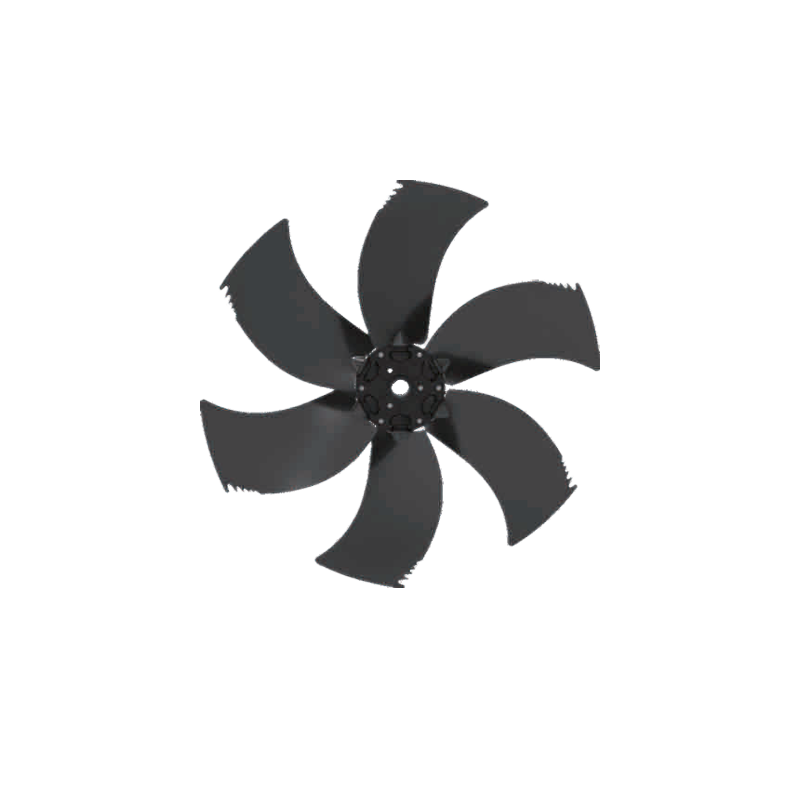
Let us define Electronically Commutated (EC) technology clearly. These modern motors combine AC and DC benefits beautifully. The motor receives standard alternating current from your grid. Onboard rectifiers convert this power into direct current internally. This internal conversion allows precise speed regulation. You eliminate bulky external frequency drives entirely. You get the efficiency of DC with the convenience of AC.
Aerodynamic design plays a crucial role in performance. Modern axial impellers feature highly optimized blade shapes. Engineers often use sickle-shaped blades for better aerodynamics. You pair these advanced impellers alongside intelligent EC motors. The system maximizes the air volume-to-power ratio perfectly. You move significantly more air per watt consumed. Your overall ventilation efficiency skyrockets.
Integrated intelligence sets these ventilation systems apart completely. Onboard electronics enable seamless and direct control. You can connect them directly into a Building Management System (BMS). They support closed-loop sensor networks effortlessly. Condition monitoring happens in real time without extra hardware. This native intelligence prevents sudden catastrophic motor failures.
Upgrading to an EC unit future-proofs your infrastructure. It establishes a modern standard for your facility. Your workshop airflow becomes highly responsive and automated. You stop guessing about indoor air quality levels. The system adjusts itself based on actual environmental data. Intelligent ventilation represents the definitive future of industrial airflow.
You must evaluate CFM and static pressure carefully. CFM measures Cubic Feet per Minute exactly. This metric represents total air volume moved. Static pressure represents the physical resistance in your space. You match the fan performance curve to your environment. Ensure it fits your exact spatial volume perfectly. Do not oversize or undersize the unit blindly.
Acoustic advantages matter significantly for indoor workspaces. A high-efficiency EC fan reduces tonal noise drastically. It also minimizes structural vibration across your ductwork. This improves occupational health and safety drastically. Workers suffer less fatigue in quieter environments. Safety compliance relies heavily on manageable indoor noise levels.
Many facility managers fear a hidden performance compromise. They assume lower energy consumption means weaker airflow. This assumption is completely false. Advanced fans achieve required air changes per hour (ACH) effortlessly. They do this without the steep energy spikes of traditional systems. You meet strict ventilation requirements while slashing energy use.
Variable demand response highlights true system efficiency. You might throttle the fan down to 50% speed. You might even drop it to 20% speed during off-hours. EC units maintain high efficiency at these partial loads. Traditional AC units lose efficiency rapidly when slowed down. Smart fans adapt to exact ventilation demands effortlessly.
| Evaluation Metric | Legacy AC Fan | EC Fan Technology |
|---|---|---|
| Speed Control Method | Binary (On/Off) or bulky external VFD | Seamless variable speed (built-in controller) |
| Efficiency at Partial Load | Very poor (efficiency drops significantly) | Excellent (maintains high motor efficiency) |
| Acoustic Profile | High mechanical noise and duct vibration | Low tonal noise and smooth operation |
| System Integration | Requires complex external controllers | Direct BMS / Modbus compatibility out of box |
You must calculate your baseline energy use first. This initial audit reveals your current operational waste clearly. Follow a strict formulaic approach to audit AC fan consumption.
Next, estimate your payback period accurately. You will face a higher initial purchase price undeniably. Compare this upfront capital expense against monthly energy savings. The financial returns usually justify the investment very quickly. Most facilities see a full return in two years. After that period, the energy savings become pure profit.
Consider hidden operational benefits during your financial analysis. EC motors generate far less waste heat internally. This naturally reduces your overall HVAC cooling load. The motors operate much cooler day and night. This cooler operation extends their physical lifespan significantly. You will require far fewer maintenance interventions over the decade.
Always check for local utility rebates before purchasing. Many regional energy efficiency programs incentivize these exact upgrades. They subsidize the transition toward smarter, greener technology. This financial assistance reduces your upfront expenses directly. Ask your vendor to help you identify applicable rebate programs.
Decide carefully between drop-in replacements or complete redesigns. Evaluate your current mounting infrastructure very closely. Does it support a direct mechanical swap? You might easily swap a workshop ventilation fan into existing housings. Sometimes, older ducts require physical modifications. Plan structural adjustments before you order the new equipment.
Electrical infrastructure presents another serious reality check. You cannot simply reuse old binary wiring blindly. Modern smart fans require constant power feeds continuously. They also need completely separate control wiring installed. You usually run a 0-10V signal or Modbus cable. Plan this low-voltage wiring upgrade early in your project.
Consider specific environmental hazards in your workshop carefully. Industrial workshops often contain very high dust levels. Welding fumes introduce microscopic airborne contaminants daily. High moisture might affect exposed internal electronic components. You must select the correct Ingress Protection (IP) rating. An IP54 or IP55 rating protects the critical onboard electronics.
Commissioning holds massive importance for overall success. You must program the fan parameters correctly upon installation. Unconfigured fans might default to 100% operation permanently. This simple oversight defeats the entire purpose of your upgrade. Ensure technicians test partial load scenarios during initial setup.
You should set strict vendor requirements immediately. Demand verifiable performance curves upfront from all suppliers. Request third-party certified energy data without exception. Look for trusted AMCA certifications on the spec sheets. This ensures the manufacturer's performance claims match real-world reality.
Evaluate system scalability before finalizing your purchase. Can the fan network easily alongside other similar units? Zone-based ventilation relies on seamless communication between multiple fans. Your chosen solution must support future factory expansions. Standardized communication protocols ensure you never get locked out.
Check the warranty and support policies very closely. Ask about specific motor replacement procedures. Determine what technical support applies during the installation phase. Strong vendor backing prevents costly delays during retrofitting. You need experts available if electrical integration issues arise suddenly.
Take decisive action to modernize your facility today. Request a comprehensive energy audit from a qualified engineer. Ask vendors for a custom financial return calculation. Base this calculation purely on your specific workshop dimensions. Gather your data and initiate the upgrade process confidently.
Upgrading to intelligent ventilation is a quantifiable business decision. It represents direct financial returns for your facility. This goes far beyond a simple corporate sustainability initiative. You reduce power bills immediately upon installation. You lower maintenance burdens drastically over the equipment lifespan. You optimize the entire working environment for your staff.
Avoid the false economy trap prevalent in industrial management. Do not replace broken AC fans using outdated AC technology. Transition toward intelligent, variable-speed ventilation solutions instead. The initial investment pays off rapidly through energy savings. Modernizing your airflow infrastructure provides a lasting competitive advantage.
Contact our engineering team today for personalized assistance. We offer detailed site assessments for complex industrial environments. Review our product catalog for advanced retrofit options. Start modernizing your facility airflow immediately. Secure your operational efficiency for the next decade.
A: EC fans use onboard electronics to convert AC to DC. This internal conversion allows for precise variable speed control. They use significantly lower energy overall. They also generate much less heat compared to standard AC motors. You gain better aerodynamic performance. You eliminate bulky external drives completely.
A: Yes. Manufacturers design many EC fans as plug-and-play replacements. They act as drop-in upgrades for standard industrial sizes. However, you must upgrade your electrical infrastructure slightly. You need to route specific control wiring properly. A simple 0-10V signal wire ensures optimal system efficiency.
A: No. EC fans have speed control electronics built directly into the motor housing. This integrated design saves valuable physical space. It reduces your installation complexity significantly. It also eliminates annoying motor noise typically induced by external VFDs. You get smart control natively.
A: Financial return depends heavily on your local energy rates. It also depends on your daily operating hours. However, typical industrial payback is achieved rapidly. You usually see full returns in 1.5 to 3 years. These savings come purely through reduced energy bills and lower maintenance demands.
